
News
Incontinence Care Moves Home as Adult Diaper Buyers Audit Supply Chains
Kimberly-Clark completed its purchase of Kenvue on 2 November, a deal with an enterprise value of about USD 48.7 billion that brings Depend into a consumer health group holding ten billion-dollar brands. Read past the price tag and the strategic language matters more: the merged company places active aging beside baby care and women's health as a core arena, with roughly USD 2.1 billion of synergies targeted. For anyone shipping absorbent products, that is a reclassification. Adult diapers were long a hospital consumable bought by the carton; they are now a retail health product chosen by a family, often by a daughter in her thirties rather than a nursing home purchasing officer.
The volumes justify the repositioning. Global adult diaper revenue was estimated at USD 14.9 billion in 2025 and USD 15.7 billion in 2026, with forecasts pointing to USD 24.8 billion by 2035 at a 5.2% compound rate. Concentration stays moderate: Essity, Kimberly-Clark, Unicharm, Ontex and Procter & Gamble held about 47.4% of 2025 sales. Where growth lands matters more. Home care took 61.2% of end use, adult diapers and briefs 45.6% of revenue, and supermarkets plus hypermarkets still handled 38.4% of distribution while e-commerce keeps gaining. Essity's retail incontinence arm grew 7.6% organically in 2025, a sign the category is expanding rather than only trading price for volume.
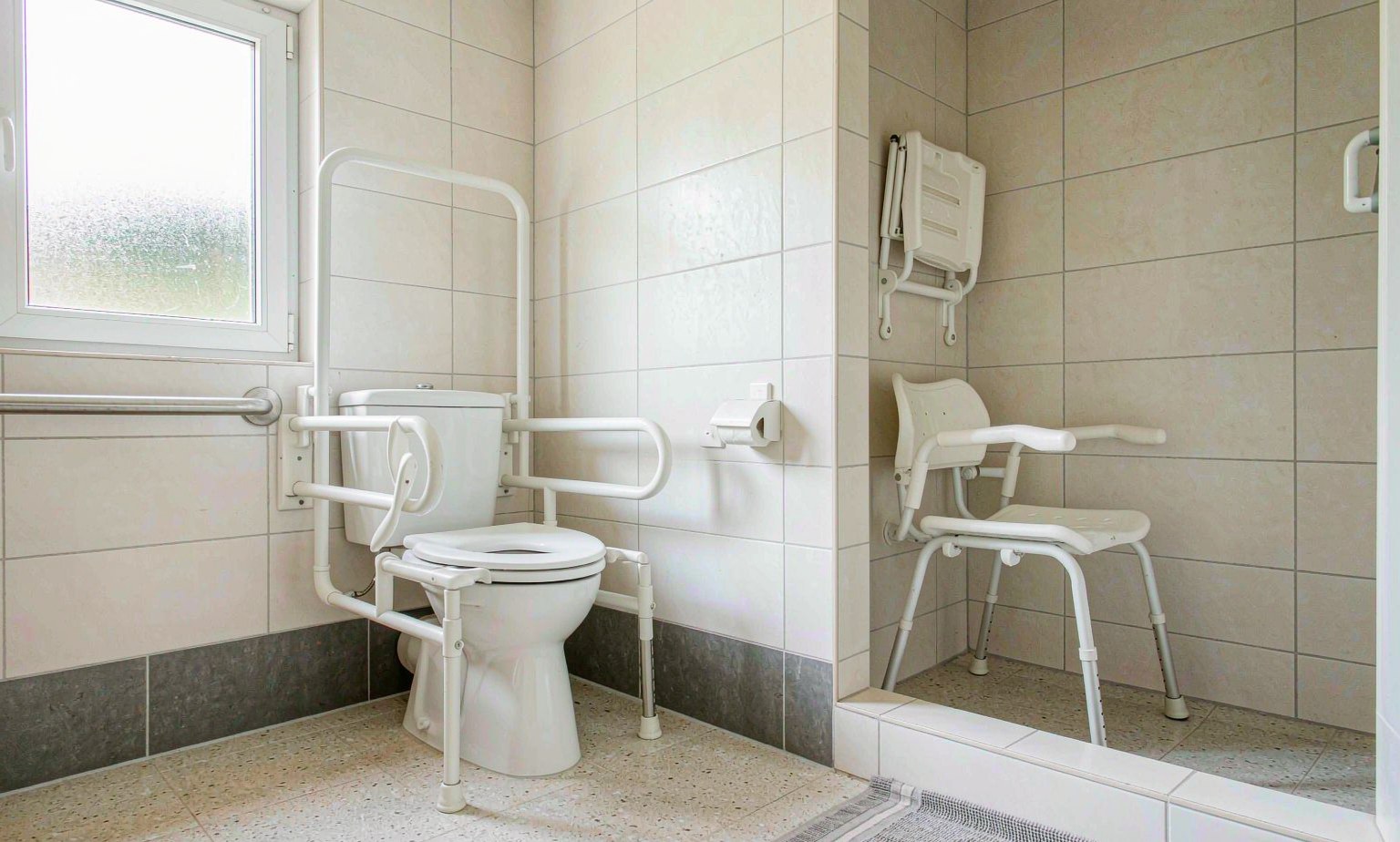
That shift changes the product. A nursing home buys one specification in bulk and trains staff to use it; a household buys several and needs them to work untrained. Night-time is where the gap shows: a leaking pad means laundry, a mattress replacement and a caregiver who has not slept. So incontinence pads, bed pads and a waterproof mattress protector sell as a set with adult diapers, and a pressure relief mattress or an adjustable bed with a bed rail gets specified, plus a smart care bed with a bed exit alarm or a fall detection radar by the door. The bathroom follows the same logic: a commode chair, a raised toilet seat, a toilet safety rail and a grab bar are bought in one order, then a shower chair, a non-slip bath mat and an overbed table handle washing and eating.
Daytime is a different problem, and it is where adult pull up pants have taken share from taped briefs, because pull-ups read as ordinary underwear, which matters more to a 70-year-old than absorbency in grams. Outings pull in the rest: a transport wheelchair or a rollator that folds into a car boot, a walking frame for the corridor, a two-handled cup and a divided plate for hands that shake, adaptive utensils and a non-slip plate for one-handed eating, a pill organizer and a reacher grabber that keep mornings independent. Compression socks ride in the same basket. Suppliers who bundle these into one shipment and one quality file win the household order; sellers of a single item lose it to whoever solved the whole morning.
Canton Fair numbers show how far buyers have moved. The 140th session closed on 4 November with 352,000 overseas buyers from 219 countries and regions, up 12.2%, and USD 26.75 billion in on-site export deals. New products were 23.2% of exhibits, a record, and 64% of exhibitors had applied AI or industrial internet tools. In the personal care halls the questions were procedural: can you pass a factory audit this quarter, where does your super absorbent polymer come from and can I see the batch records, what is the smallest first order you will accept, how fast can you ship samples carrying my artwork. Distributors of elderly care products said they were consolidating senior care supplies across lines for one quality file.
Cost and compliance are tightening. The European Commission imposed definitive anti-dumping duties of 39.8% to 48.1% on Chinese PET spunbond nonwoven from 31 October for five years, a measure the European nonwovens association welcomed. The scope is narrow, needle-punched polyester for waterproofing membranes rather than diaper topsheet, yet it shows duty exposure is now settled by specification and customs code, not product family. Demand keeps widening regardless. China alone counts 323 million people aged 60 and over, and industry estimates put absorbent penetration near 3%, against a world average around 12% and roughly 80% in Japan. Long-term care insurance, expanded from 49 pilot cities, now pays for these products in some regions, and about 45% of purchases come from adult children.
Two judgments follow. First, the home channel rewards a wide, shallow range: more sizes, more absorbency levels, smaller packs and a design language that does not look clinical, because buyer and user differ, and Chinese retail surveys put acceptance of RMB 2 to 3 per piece near 41%, falling to 4% above RMB 4. Second, the moat is documentation. Retail chains and care providers audit batch records, material traceability and sustainability options before price, and a supplier who absorbs a small trial order then scales into containers beats one quoting cents less. Ageing in place is not a slogan here but an order pattern, and the silver economy is moving the same way: assistive devices and independent living equipment are bought as home furnishing, not medical goods.
Yiwu Orange Light Future Technology keeps a close eye on global trends in elderly health. Specializing in age-friendly wellness products, we offer a range of mature solutions to support seniors' safety and health at home. We welcome inquiries and business discussions from all partners!
RELATED NEWS
- Global Consensus on Healthy Aging: Strength, Aerobic and Balance Training Form t
- Adapting to an Ageing Society: Global Nations Boost Healthcare Security for Olde
- Sensory and Non-Drug Therapies: New Dementia-Friendly Care Solutions Explored Gl
- Ageing and health
- Global Rise of Silver Volunteering: Seniors Share Experience to Give Back
CATEGORIES
LATEST NEWS
CONTACT US
Name: Fannie
Mobile:+86 13375799060
Tel:+86 13375799060
Whatsapp:+86 13375799060
Email:fannie@ywolftech.com
Add:589 Longtan Road,Jinhua City Zhejiang Province China