
News
Global Consensus on Healthy Aging: Strength, Aerobic and Balance Training Form the Golden Exercise Plan for Older Adults
The Global Consensus on Healthy Aging released by the Working Group of the International Conference on Sarcopenia and Frailty Research states that traditional exercises such as walking alone are not sufficient to fully preserve physical function in older adults. A combination of strength, aerobic and balance training constitutes the golden scientific exercise plan for the elderly, offering a unified reference standard for community-based active ageing interventions worldwide.
As global population ageing accelerates, sarcopenia, falls leading to disability and declining cardiopulmonary function have become common challenges in geriatric health. For a long time, there has been a prevalent misconception in many regions that older adults should rest and avoid strength training. Many seniors rely solely on daily walking as their only form of exercise. This consensus, compiled from research by global experts in geriatric medicine and exercise science, clarifies that age-related muscle loss, impaired balance and reduced cardiopulmonary capacity occur simultaneously. Aerobic exercise alone cannot stop continuous muscle mass decline, and balance training is indispensable to cut fall risks. The three types of training complement one another, and none can be omitted.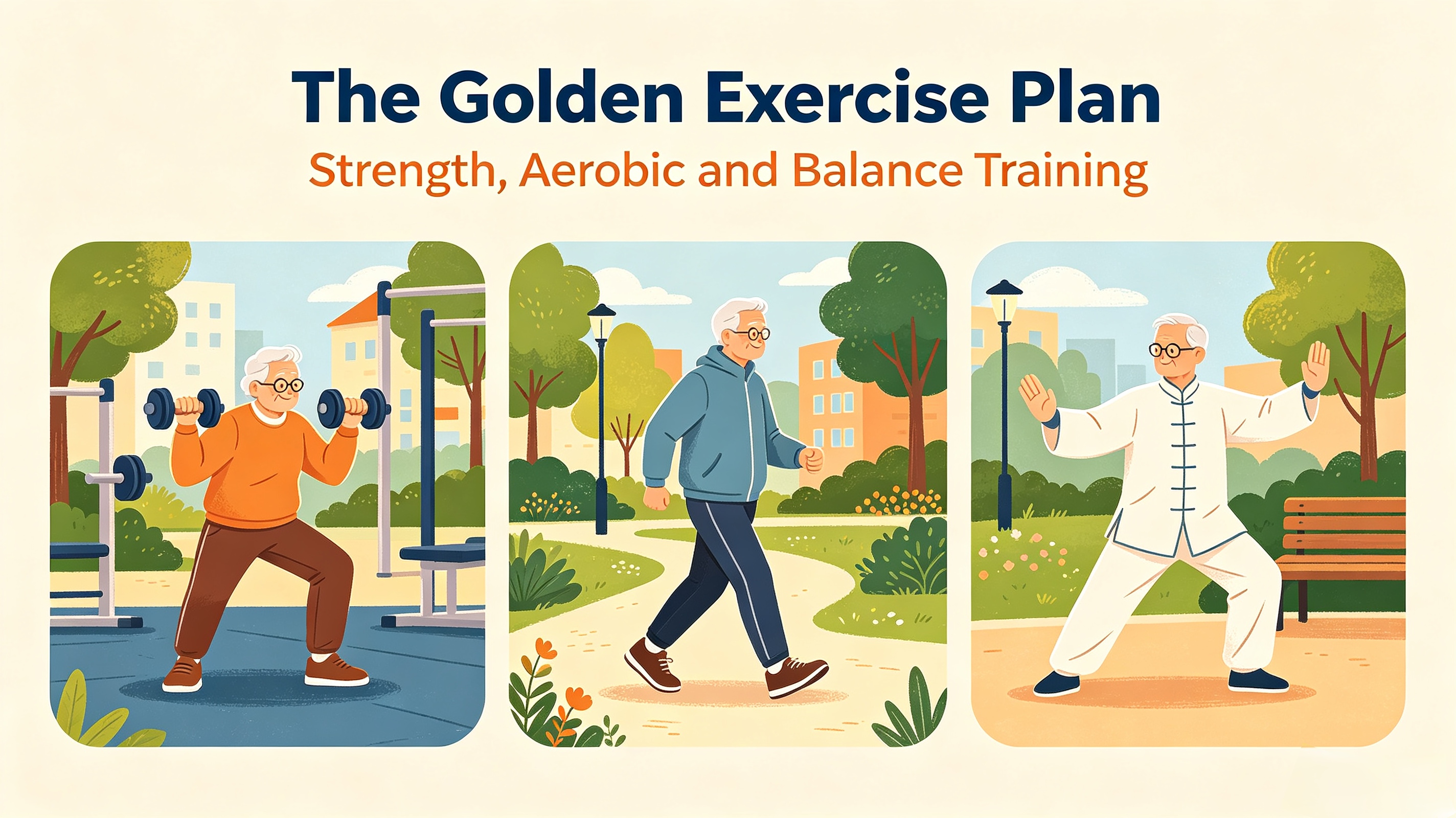
The consensus provides clear implementation recommendations for the three training modalities. Strength training aims to slow sarcopenia and maintain bone density, with 2 to 3 sessions per week recommended. Low-barrier exercises including resistance bands, light dumbbells, wall sits and seated leg lifts target limb and core muscle groups. Workouts should bring mild muscle soreness that resolves by the next day; heavy load training is unnecessary. Aerobic exercise preserves cardiopulmonary endurance, with a recommended total of 150 minutes of moderate activity weekly. Brisk walking, cycling and swimming are suitable options, at an intensity where the older adult can still hold a conversation. Balance training focuses on fall prevention, 2 to 3 times weekly. Single-leg stands, tai chi and side stepping improve proprioception and reduce fracture and injury risks among seniors.
Experts from the working group note that this integrated exercise plan can be adjusted according to individuals’ chronic conditions and mobility levels for older adults with varying physical status. Those with decent mobility can follow the full three-part training programme, while frail and mobility-limited seniors can start with short balance drills and seated strength exercises and progress gradually. The consensus also reminds older adults with severe cardiovascular diseases or acute joint pain to undergo health assessments before starting systematic training to avoid exercise-related risks.
At present, communities across Europe and Southeast Asia have adopted this exercise framework. The three-in-one training has been integrated into courses at senior community centres, with simple assistive devices to lower participation barriers. Project data shows that older adults who stick to integrated training achieve markedly better muscle strength and walking stability compared with the control group who only walk, alongside a substantial drop in fall incidence.
Leading experts in global geriatric health emphasise that physical activity is the lowest-cost intervention to prevent frailty and preserve independent living capacity in later life. This consensus overturns the traditional stereotype that seniors should only take slow walks and rest. It encourages public health authorities worldwide to redesign senior fitness services and incorporate combined strength, aerobic and balance training into health education, helping more older adults retain mobility and preserve dignity in later life.
Yiwu Orange Light Future Technology keeps track of global trends in geriatric health and focuses on developing age-friendly health products. A range of mature products support safe and healthy living for seniors at home. Partners from all sectors are welcome for inquiries and business discussions!
RELATED NEWS
- Smart Exoskeleton Restores Independent Walking Freedom for the Elderly
- Heatwaves Pose Multiple Health Impacts on Seniors with Chronic Diseases
- Asia-Pacific Joins Hands for Healthy Ageing: Primary Healthcare as the Core Driv
- Advancing Age-friendly Mobility: Protecting Mobility Health of Older Adults
- Transformation of Walking Aids: Three Innovations — Lightweight, Smart, Human-Or
CATEGORIES
LATEST NEWS
CONTACT US
Name: Fannie
Mobile:+86 13375799060
Tel:+86 13375799060
Whatsapp:+86 13375799060
Email:fannie@ywolftech.com
Add:589 Longtan Road,Jinhua City Zhejiang Province China