
News
Silver Generation Returns to Classrooms: Global Senior Education Pilots Turn Learning into Social Bonds for the Elderly
As global population aging accelerates, elderly loneliness and insufficient social participation have become public health and social issues faced by many countries. France, the United Kingdom, Singapore, Moldova, Lithuania and other nations are rolling out pilot programmes for the University of the Third Age (U3A). Leveraging lifelong learning platforms to build social networks for older adults, these programmes use classrooms as social bonds to help the silver generation escape isolation and implement the concept of active ageing.
Originating in Toulouse, France, in 1973, the University of the Third Age differs from conventional universities. It sets no entry requirements or examinations and offers courses for retired seniors. Two primary models have taken shape over time. The French model delivers systematic courses supported by university resources, while the British model operates on mutual aid and self-governance, with many courses taught by older learners with professional expertise. In recent years, this model has spread beyond Europe to pilot sites across Asia and Eastern Europe. Courses now cover practical subjects including digital skills, geriatric nutrition, chronic disease management and community volunteer services, rather than merely arts and humanities.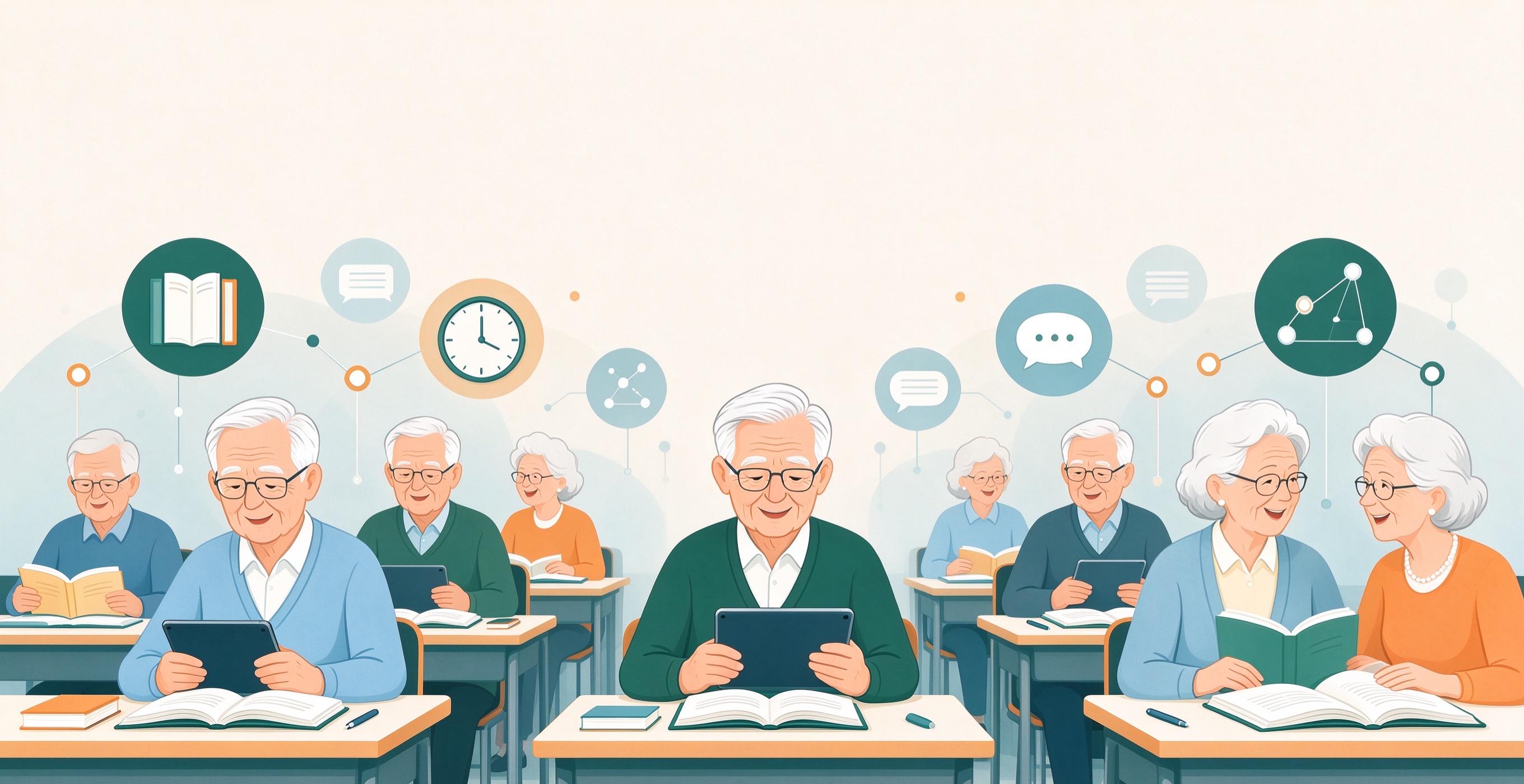
In Singapore, lifelong learning for seniors is embedded in national ageing policies. Most senior classes are hosted within local communities for easy access. Many elderly participants learn smartphone skills, online medical consultation and digital fraud prevention here. Tea gatherings and interest groups after classes provide consistent social opportunities for seniors living alone. Supported by the United Nations Population Fund, Moldova launched its U3A pilot, attracting nearly 400 older adults in just three years. Beyond knowledge acquisition, the project encourages participants to join community volunteer teams. Many seniors say the greatest benefit is not new knowledge, but stable peer connections that help them stay engaged with society. Lithuania has expanded its senior education pilots in recent years, offering courses targeting older residents in rural towns to address the shortage of social resources for the silver generation in countryside areas.
The World Health Organization has repeatedly warned that social isolation among older adults significantly raises risks of chronic illnesses, depression and even premature death. Ageing policy researchers across countries argue that traditional elderly care mainly focuses on material needs such as food and accommodation. By contrast, senior university programmes fill gaps in mental well-being and social interaction. Classrooms naturally create low-pressure, regular social settings. Older adults gather around shared interests and build friendships through discussions, group activities and after-class events, easing the sense of loss after retirement when people lose their former social roles. Many learners become daily companions, going out together and supporting one another to form small mutual-aid communities.
Nevertheless, these pilots face challenges. Many regions in Europe report shortages of teaching staff, venues and funding, alongside limited course availability in remote rural areas. Some frail and mobility-impaired seniors cannot attend offline classes, and the digital divide hinders access to online courses. Operators are exploring improvements by launching hybrid online-offline programmes, combining small-group sessions, outdoor study tours and community exhibitions to lower barriers to participation.
Data from the International Association of Universities of the Third Age (AIUTA) shows global enrolment continues to rise steadily. This lifelong learning practice proves that senior education is more than recreational pastime; it serves as a low-cost social intervention. Learning breaks age barriers and classrooms build social bridges. An increasing number of countries recognize that building an ageing society requires not only safeguarding the quality of life for older adults, but also creating continuous opportunities for the silver generation to maintain social ties, take part in public life and enjoy a fulfilling, dignified later life.
Yiwu Orange Light Future Technology keeps track of global trends in elderly health and specializes in age-friendly health products. A range of mature products support safe and healthy ageing at home. Partners from all sectors are welcome for inquiries and cooperation!
RELATED NEWS
- Overseas Attention Drawn to Wheelchair Safety: Proper Operation Cuts Senior Acci
- Small Wheelchairs Uphold Dignity in Old Age: The World Re‑examines Mobility Righ
- Complete Line of Geriatric Wellness Goods Launched Focusing on Elderly Health Pr
- Global Senior Care Development: Upgrading Services for Elderly Health
- Gentle Exercises Prevail Worldwide: Tai Chi and Brisk Walking Top Wellness Choic
CATEGORIES
LATEST NEWS
CONTACT US
Name: Fannie
Mobile:+86 13375799060
Tel:+86 13375799060
Whatsapp:+86 13375799060
Email:fannie@ywolftech.com
Add:589 Longtan Road,Jinhua City Zhejiang Province China