
News
Geriatric Sports Medicine Advances: Resistance Training Added to Older Adult Health Management
As global population aging accelerates, sarcopenia, muscle strength loss and elevated fall risks have become unavoidable challenges for age-related health governance across countries. Traditional geriatric health management has largely focused on chronic disease monitoring, dietary adjustment and daily care, while exercise intervention has long remained on the sidelines. In recent years, the field of geriatric sports medicine has witnessed a major shift. A growing number of countries have formally incorporated standardized strength training into routine health management programs for older adults. Scientific resistance training is used to slow age-related muscle loss, offering a new pathway for the implementation of active ageing.
In Europe, Australia, Singapore and other regions, geriatric sports medicine specialists have rolled out strength training standards tailored to older adults. Unlike the high-intensity workouts many people imagine, senior strength training prioritizes low load, high safety and gradual progression. It uses resistance bands, light dumbbells and bodyweight exercises to target lower limbs, core muscles and upper-body muscle groups. Clinical observations show that older adults who stick to regular resistance training achieve better preservation of muscle mass and lower-limb strength, improved balance and a marked reduction in fall risks. The practice also delivers positive outcomes for blood glucose levels, bone mineral density and the ability to carry out activities of daily living.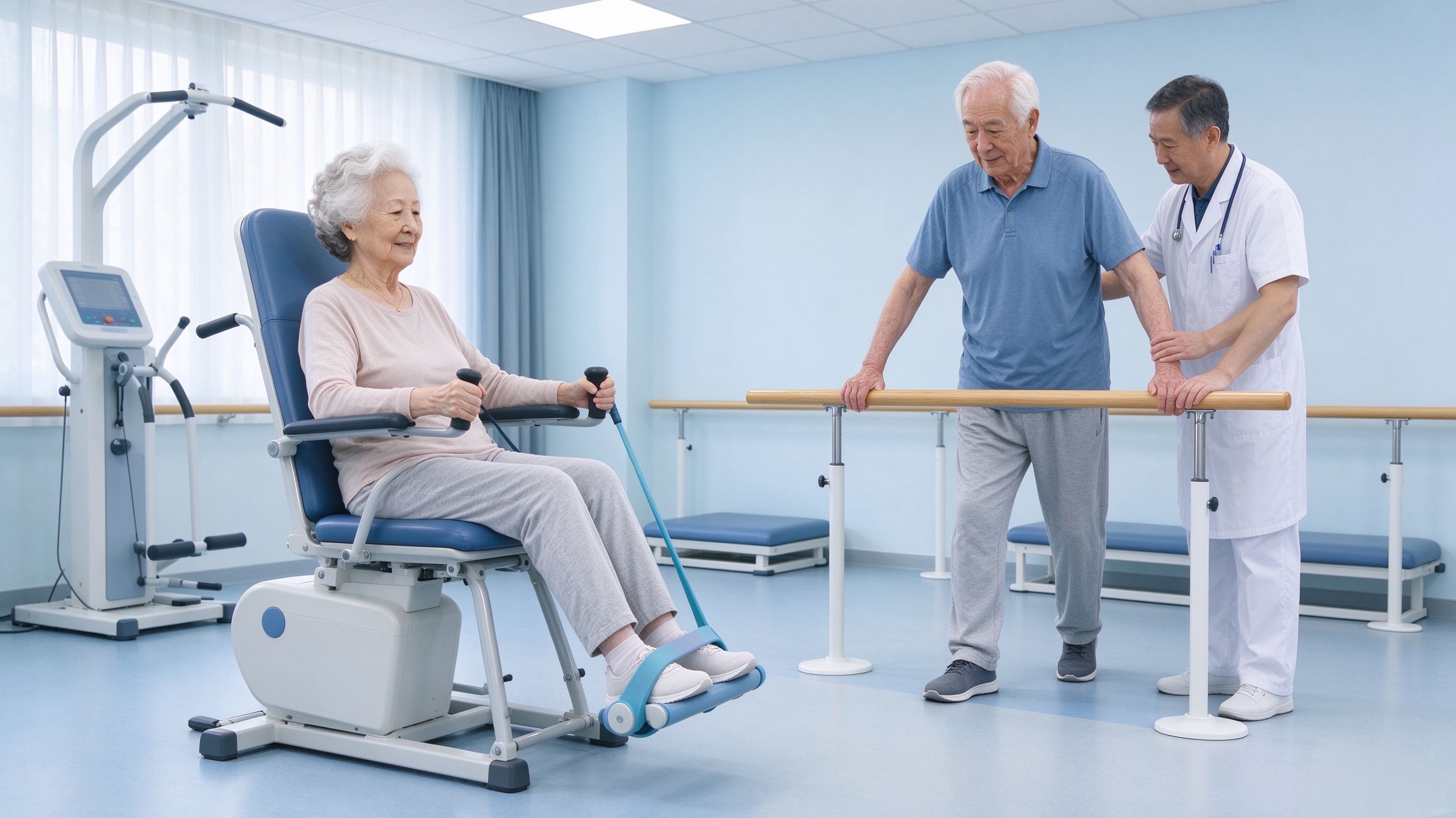
Many community senior care centers and geriatric rehabilitation facilities have hired certified exercise instructors and linked strength training to routine physical check-ups and chronic disease follow-ups. After completing health assessments, older adults receive personalized exercise prescriptions. Training intensity is adjusted according to cognitive status, joint conditions and cardiovascular health to prevent injuries caused by unsupervised exercise. Practitioners note that the long-held belief among many seniors and their families that older people should rest and avoid exercise for fear of injury is gradually changing. The core of geriatric sports medicine is not to achieve athletic performance gains, but to preserve independent living capacity and extend healthy life expectancy.
The academic community continues to build supporting evidence. Geriatric research institutes in multiple countries have collected long-term data on exercise interventions for older populations. Compared with medication or nutritional supplementation alone, a combination of proper nutrition and standardized resistance training proves to be a cost-effective approach to sarcopenia management. Ongoing efforts are exploring tiered training frameworks with separate modules for frail advanced-age seniors, community-dwelling independent older adults and robust younger seniors, balancing safety and effectiveness.
Nevertheless, barriers remain to wider adoption of this new model. There is a severe shortage of qualified instructors specialized in geriatric exercise. General medical staff often lack training in sports medicine and struggle to provide safe and practical exercise advice. In addition, public senior care facilities frequently lack simple fitness equipment and age-friendly activity spaces, leaving older adults in remote areas with limited access to such services. Some seniors live with joint pain and complicated underlying illnesses, requiring joint evaluation by general practitioners, rehabilitation therapists and sports medicine specialists.
United Nations reports on ageing have repeatedly stressed that the core of active ageing lies in safeguarding older people’s right to live independently. Integrating strength training into geriatric health management represents a typical shift from reactive treatment to proactive health. Industry insiders expect this geriatric sports medicine framework to be rolled out in more countries in the future. It can work alongside age-friendly renovations, dementia support and fall prevention initiatives to build a more comprehensive geriatric health support system, helping more seniors enjoy an energetic, dignified and independent later life.
Yiwu Orange Light Future Technology keeps a close eye on global trends in senior health and specializes in age-friendly health products. A range of mature offerings support safe and healthy ageing at home. Inquiries and cooperation from all sectors are welcome!
RELATED NEWS
- 10 inspiring hobbies and activities to keep the elderly active and happy
- Guarding Seniors’ Every Step: Classifications & Adapted Functions of Walking Aid
- Global Consensus on Healthy Aging: Strength, Aerobic and Balance Training Form t
- Beyond Medical Treatment: WHO Highlights Social and Mental Health in Active Agei
- Combating Geriatric Obesity Worldwide: International Projects Promote Healthy Ol
CATEGORIES
LATEST NEWS
CONTACT US
Name: Fannie
Mobile:+86 13375799060
Tel:+86 13375799060
Whatsapp:+86 13375799060
Email:fannie@ywolftech.com
Add:589 Longtan Road,Jinhua City Zhejiang Province China