
News
Delayed Retirement Trend: A Look at Overseas Seniors Returning to Work
As global population ageing intensifies, pension systems are under strain and labour shortages are widening. Delayed retirement has become a common reform direction for many economies. With the gradual rise in the statutory retirement age, it is no longer uncommon for overseas seniors to return to the workforce. The re-employment of older adults is reshaping labour markets across multiple countries and bringing the concept of active ageing into reality.
In East Asian countries at the forefront of population ageing, silver employment has become commonplace. Japan has revised the Act on Stabilization of Employment of Elderly Persons, requiring enterprises to offer continued employment schemes and allowing workers to choose to stay employed up to the age of 70. Older workers can be widely found in convenience stores, transport services and logistics support sectors. Relevant surveys show that more than 40% of respondents plan to keep working after turning 70. Many seniors opt for part-time and short-hour roles to balance income and physical condition. South Korea has also pushed ahead with its senior employment initiatives. Silver job service centres have been set up nationwide to develop suitable positions such as green maintenance, public guidance and community services. The government provides subsidies for businesses that hire older workers. Employment among people aged 55 to 79 keeps growing, and senior workers serve as a vital supplement to the service sector and grassroots public services.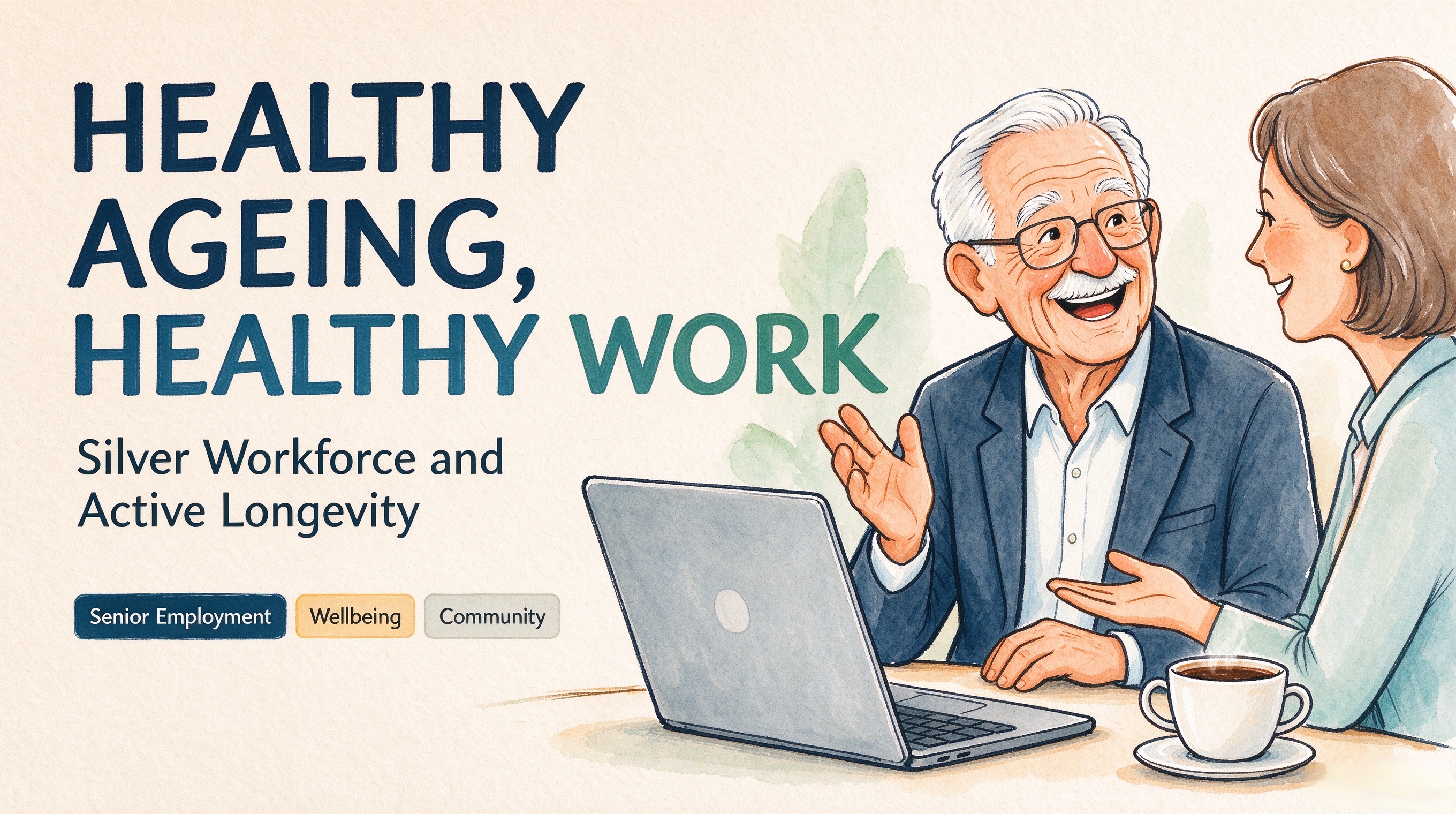
European countries have generally adopted phased delayed retirement plans paired with flexible pension schemes to encourage older people to remain in the labour market. Germany has raised the retirement age in stages; those born in 1964 or later will have a statutory retirement age of 67. Its Flexible Pension Act allows workers to choose partial retirement and draw a pension while continuing to work part-time. Many retired professionals from technical and consulting fields return as advisors, turning years of experience into service value. Nordic countries have gone further. Denmark links retirement age to life expectancy and plans to raise it gradually to 70. Senior employment there prioritises job suitability, with many older workers taking up low-intensity roles in culture, education and elderly care. EU-wide data indicates that labour force participation among people aged 55 and above has risen markedly over the past decade. Part-time and short-hour arrangements dominate senior employment, while full-time positions account for a shrinking share.
Overseas seniors generally fall into two categories when it comes to motivations for re-employment. Some work out of financial pressure, using earnings to top up pensions and offset rising living and care costs. Others choose to work voluntarily to maintain social connections and make use of their experience, which aligns with the spirit of active ageing. Many veteran engineers, accountants and teachers work on a project basis or as remote consultants. They do not seek heavy workloads, focusing instead on sustaining a sense of social belonging. Correspondingly, senior jobs overseas show clear differentiation. Low-threshold service and manual short-term roles are abundant, while older professionals with certified qualifications have better access to flexible, high-value re-employment opportunities.
Globally, silver employment driven by delayed retirement represents a long-term trend shaped by demographic shifts. It can ease labour shortages and reduce pressure on public pension finances, while offering pathways for older adults to fulfil their potential. Lessons from overseas experience show that sound development of senior employment cannot rely on delayed retirement policies alone. Supporting measures including labour protection, age-friendly workplace upgrades and inclusive skills training are essential. These help balance economic needs and the well-being of older people, ensuring seniors can access decent, safe and voluntary employment opportunities.
Yiwu Orange Light Future Technology keeps track of global trends in elderly health and specialises in age-friendly health products. A range of proven products support seniors to live safely and healthily at home. Partners from all sectors are welcome to enquire and discuss cooperation!
RELATED NEWS
- Silver‑age Risks Amid Climate Disasters: August Typhoons Expose Survival Plights
- Active Ageing: Seniors Rebuild Self-Worth via Travel and Social Connection
- Digital Assistance for Seniors: South Korea, Australia, France Build Age-Friendl
- Age-Friendly Home Renovation Boom in Europe: Smart Bathrooms and Gait Monitoring
- Deepen the reform of elderly care services
CATEGORIES
LATEST NEWS
CONTACT US
Name: Fannie
Mobile:+86 13375799060
Tel:+86 13375799060
Whatsapp:+86 13375799060
Email:fannie@ywolftech.com
Add:589 Longtan Road,Jinhua City Zhejiang Province China