
News
Guarding Seniors’ Every Step: Classifications & Adapted Functions of Walking Aids
With deepening population aging, age-friendly rehabilitation assistive devices have become vital tools to safeguard elderly people’s travel safety and improve their quality of life in old age. As core equipment for seniors’ daily walking and rehabilitation training, walking aids deliver scientific supportive protection, effectively cutting fall risks and easing walking strain. Many families struggle with improper purchases and inconvenient use due to limited understanding of walker types and applicable scenarios. To address this, industry professionals share a guide to mainstream walking aid categories and their core tailored functions, helping families pick suitable products to reliably protect seniors on every step of their journeys.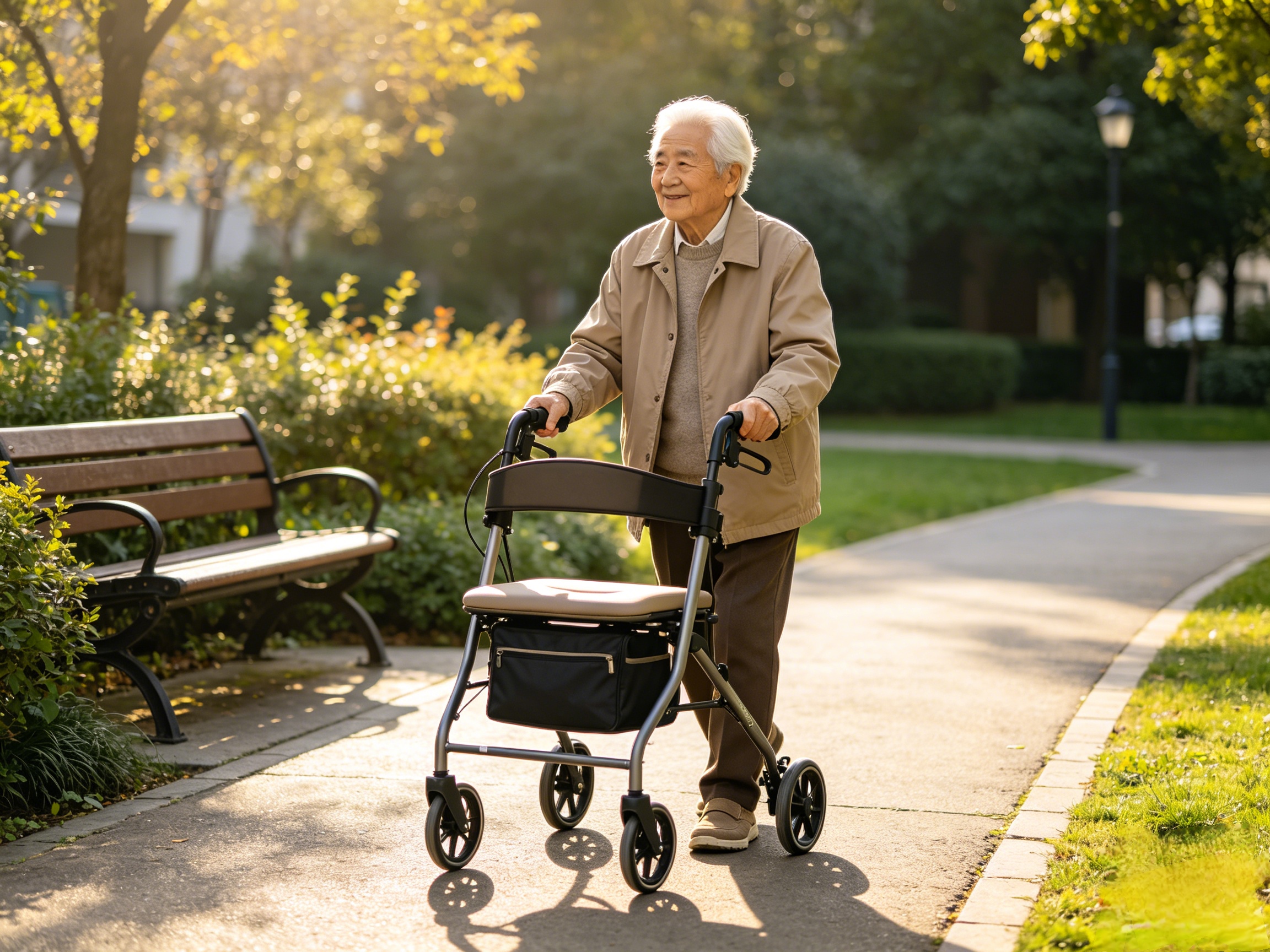
Core Functions of Walking Aids
The most fundamental and critical function of walking aids is to reduce weight bearing on lower limbs. For those suffering from osteoporosis, arthritis, leg weakness or recovering from surgery, the load capacity of lower limbs drops sharply. The frame of a walking aid bears part of the user’s body weight, lessening wear on knees and ankles and facilitating injury recovery.
Secondly, walking aids stabilize balance and prevent falls. Featuring multi-point supporting structures with a wider support range and superior stability, they effectively offset poor balance and unsteady gaits common among the elderly, greatly lowering fall hazards both at home and outdoors. They serve as an essential safety guarantee for senior citizens with advanced age.
Additionally, walking aids assist standing up and correct walking postures. Most models come with double-height handrails, enabling users who have sat or lain for long periods to stand with support and relieve stiffness in legs and waists. During rehabilitation training, they standardize walking motions, eliminating abnormal limping or skewed strides and helping users gradually regain normal mobility.
Main Classifications of Walking Aids and Target Users
1. Wheelless Fixed Walkers
Wheelless walkers are the most basic design with maximum stability, supported entirely by anti-slip foot pads with no risk of sliding. Users must lift the whole frame to move forward, delivering powerful support and high safety performance. They are ideal for patients in the early postoperative recovery stage after fractures, people with stroke sequelae, those with weak lower limb muscle strength and poor balance, and are mainly used for short-distance indoor walking and rehabilitation exercises.
2. Two-Wheel Walkers
Two-wheel walkers have sliding front wheels and fixed anti-slip rear foot pads, removing the need to repeatedly lift the frame for effortless movement. Balancing stability and flexibility, they solve the cumbersome, labor-intensive drawbacks of wheelless walkers. They fit middle-aged and elderly people with mild leg weakness and relatively steady mobility for daily indoor walking and short trips indoors and outdoors.
3. Four-Wheel Walkers with Seats
Also known as rollators, four-wheel walkers are equipped with omnidirectional casters, hand brakes, padded seats and storage compartments. Light and flexible to push, they are the most widely used age-friendly mobility aids available. Users can sit down to rest whenever fatigued, making them perfect for long outdoor trips such as strolling, grocery shopping and hospital visits. They cater to seniors with basic self-mobility yet limited physical endurance.
4. Specialized Functional Walkers
Custom-designed for specific groups, this category covers multiple sub-types. Forearm support walkers suit users with weak wrists or arthritis; knee support walkers are dedicated to those recovering from calf and ankle fractures; adjustable pediatric walkers are made for children with physical disabilities, with customizable dimensions to match growing heights while balancing rehabilitation outcomes and comfort.
5. Lightweight Smart Walkers
Representing a new generation of high-end assistive devices, smart walkers adopt lightweight carbon fiber and aerospace-grade aluminum alloy, making them portable and easy to fold. Integrated with technological features including AI gait adjustment, obstacle detection, emergency one-touch call and intelligent fall alerts, they break the single supportive limitation of traditional walkers, delivering all-round intelligent, safe and humanized assistance. They stand as the primary development trend for age-friendly rehabilitation aids in the future.
Rehabilitation experts note that the key to selecting a walking aid lies in proper matching rather than high-end styling. A well-suited walker can not only reduce lower limb strain and boost physical recovery for seniors, but also enhance their ability to travel independently and preserve their dignity in later life. Moving forward, with the wider popularization and continuous optimization of age-friendly assistive devices, diversified, refined walking aid products will build a safer, more comfortable and more convenient mobility protection system for the aging population.
Yiwu Orange Light Future Technology offers a wide variety of walking aid models. Welcome to contact us for consultation and selection!
RELATED NEWS
- Overlooked Silent Threat: Sarcopenia Impairs Quality of Life Among Older Adults
- Getting the Right Wheelchair Is Not Enough: Global Reflection on Hidden Health R
- Silver‑age Risks Amid Climate Disasters: August Typhoons Expose Survival Plights
- New Essential Bathing Aid for Senior Citizens: Diverse Designs & Practical Funct
- Global Silver Age Watch: Proper Use of Shower Chairs Safeguards Dignity of Disab
CATEGORIES
LATEST NEWS
CONTACT US
Name: Fannie
Mobile:+86 13375799060
Tel:+86 13375799060
Whatsapp:+86 13375799060
Email:fannie@ywolftech.com
Add:589 Longtan Road,Jinhua City Zhejiang Province China