
News
Active Ageing: Seniors Rebuild Self-Worth via Travel and Social Connection
Against the backdrop of the advancing super-aged society worldwide, the connotation of active ageing is evolving. Beyond focusing merely on basic support such as medical care and pension security, a growing number of countries and regions are turning their attention to the mental well-being of older adults. By creating social scenarios through silver tourism and community activities, they help seniors overcome loneliness and rediscover self-worth through interaction and experience. The active ageing framework put forward by the World Health Organization highlights health, participation and security as its three pillars, and travel and social engagement serve as vital vehicles to encourage older adults to keep participating in social life.
In recent years, many European countries have launched supportive programmes for age-friendly travel. Some distribute holiday vouchers to subsidise travel for low-income seniors and lower the financial barriers for them to go out. Local travel agencies have also revised their product strategies, moving away from rushed, check-in-style itineraries and focusing on slow-paced cultural stays, nature walks and workshop experiences. These trips are fully equipped with barrier-free facilities, on-site medical support and flexible rest schedules. Official statistics from Greece show that the travel frequency and spending of people aged 65 and above have risen markedly in recent years. Many seniors regard group trips as opportunities for steady social interaction. They meet peers during journeys and later organise community walks, dinners and hobby groups on their own, making travel a starting point for long-term social networks. Senior travel cooperatives in Belgium and France have operated for years. Their core aim is not simply sightseeing, but to build mutual-support peer circles and ease the widespread problem of social isolation among the elderly.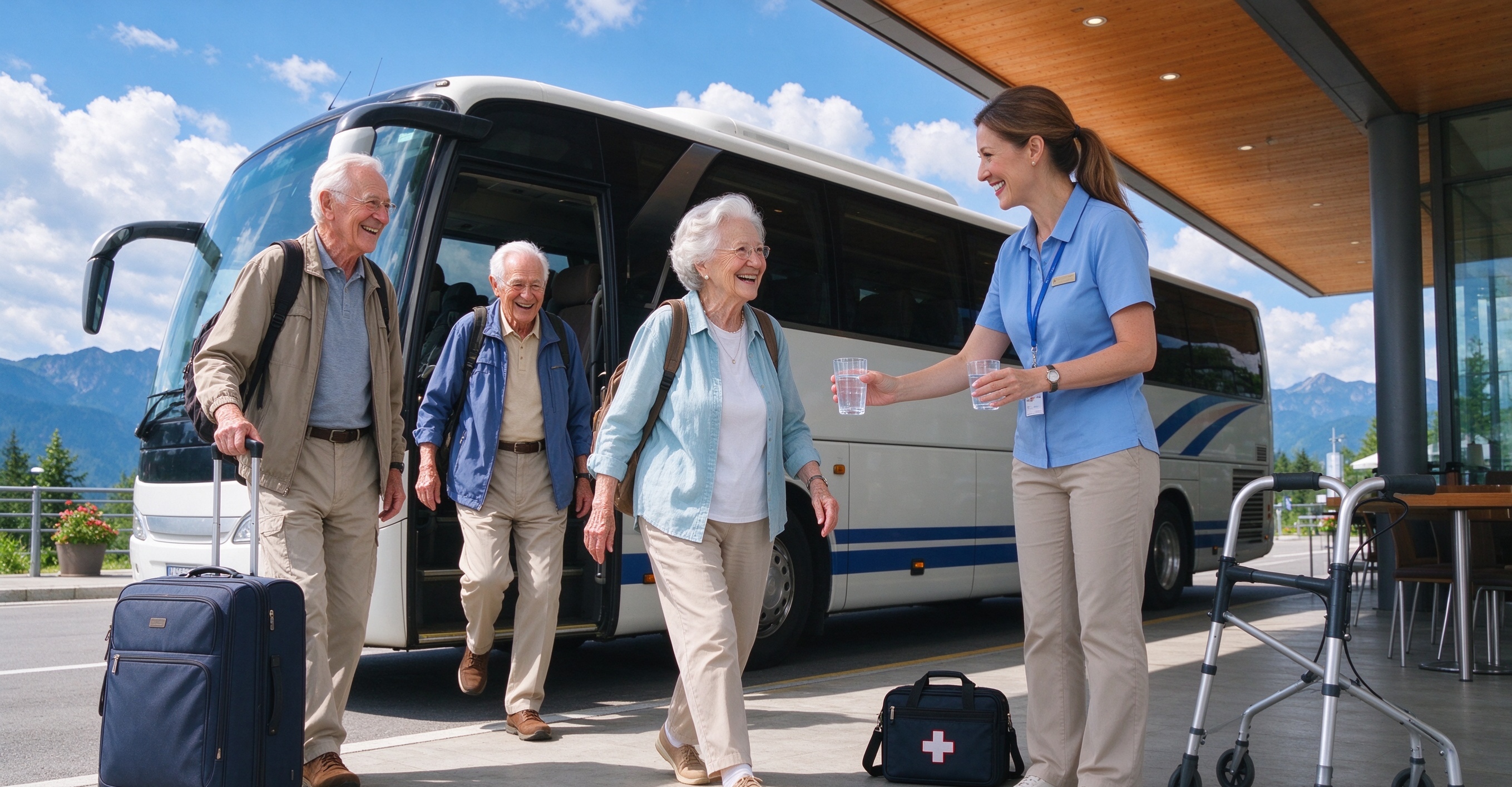
Highly aged economies in Asia including Singapore and the Republic of Korea are also exploring localised solutions. Singaporean travel agencies have rolled out culture-focused silver travel routes tailored to seniors’ preferences for history, food and light experiences, with limited daily schedules prioritising travel safety and comfort. Many seniors say that what they cherish most on trips is not the scenery, but chatting and sharing life stories with peers. Local service providers in the Republic of Korea offer group travel accompanied by carers with social work and care backgrounds, supporting seniors who live alone or have limited mobility and solving the practical difficulty of wanting to travel without companions. Large silver community organisations in Japan take travel as an entry point to develop regular hobby groups, organising hot spring retreats, historical study tours and gentle outdoor walks. They turn one-off travel experiences into stable offline social connections, reaching millions of elderly members.
Educational silver travel programmes in the United States take a different approach, offering routes across nearly 100 countries. Positioned as knowledge-focused travel, they invite scholars and experts to give on-tour lectures, turning journeys into mobile classrooms. Retirees learn and discuss along the way, exchanging ideas with like-minded companions and breaking the stereotype that retirement means withdrawal from society. Many participants note that their sense of identity tends to fade after leaving the workforce. New insights and friendships gained from travel can reignite a sense of achievement and reassure them that they remain active, vocal members of society. Such programmes prove that for the new generation of retirees, travel is far more than wellness and relaxation; it is a channel for self-expression and rebuilding social identity.
Travel opens up space, and social engagement builds connections. Slow stays along the Mediterranean coast, light cultural trips in Southeast Asia and educational tour groups in North America — these initiatives across the globe point to the same direction: in the age of longevity, later life can be rich in spiritual dimensions. Older adults are not merely recipients of elderly care services. They can still build social bonds and create experiences, finding their own sense of value and belonging through journeys and encounters.
Yiwu Orange Light Future Technology keeps a close eye on global development trends in elderly health and specialises in age-friendly health products. A range of mature products help seniors live safely and healthily at home. Partners from all sectors are welcome to enquire and negotiate!
RELATED NEWS
- Longevity Research Fuels Global Age-Friendly Products for Independent Senior Liv
- Safety and Vitality in Balance: Nations Support Seniors to Enjoy Healthy Outdoor
- Caregiver Tips: 5 Things to do for Long-term Bed Rest Care
- International Congress of Nutrition: Customized Nutritional Diet Improves Gastro
- Beyond Longevity with Illness: WHO Strives to Boost Healthy Life Expectancy
CATEGORIES
LATEST NEWS
CONTACT US
Name: Fannie
Mobile:+86 13375799060
Tel:+86 13375799060
Whatsapp:+86 13375799060
Email:fannie@ywolftech.com
Add:589 Longtan Road,Jinhua City Zhejiang Province China