
News
International Elderly Care Guide: Guidelines for Proper Commode Chair Use Released to Reduce Home Fall Risks
As global population aging continues to accelerate, aging in place has become the preferred option for the vast majority of older adults. Bathrooms are where most household accidents occur, and falls during toileting remain a key public health challenge in elderly care. As a widely used age-friendly toileting aid, the commode chair serves semi-disabled seniors, those with joint degeneration, people with limited mobility after surgery and older adults with impaired balance. It enables users to use the toilet near their bed instead of travelling to the bathroom, helping them preserve independence. However, long-term tracking by multiple international elderly research institutions shows that many bumps and falls related to toileting are not caused by product quality defects. Instead, caregivers and family members lack knowledge of standard operating procedures. Improper placement, adjustment and use of commode chairs turn these assistive devices into safety hazards.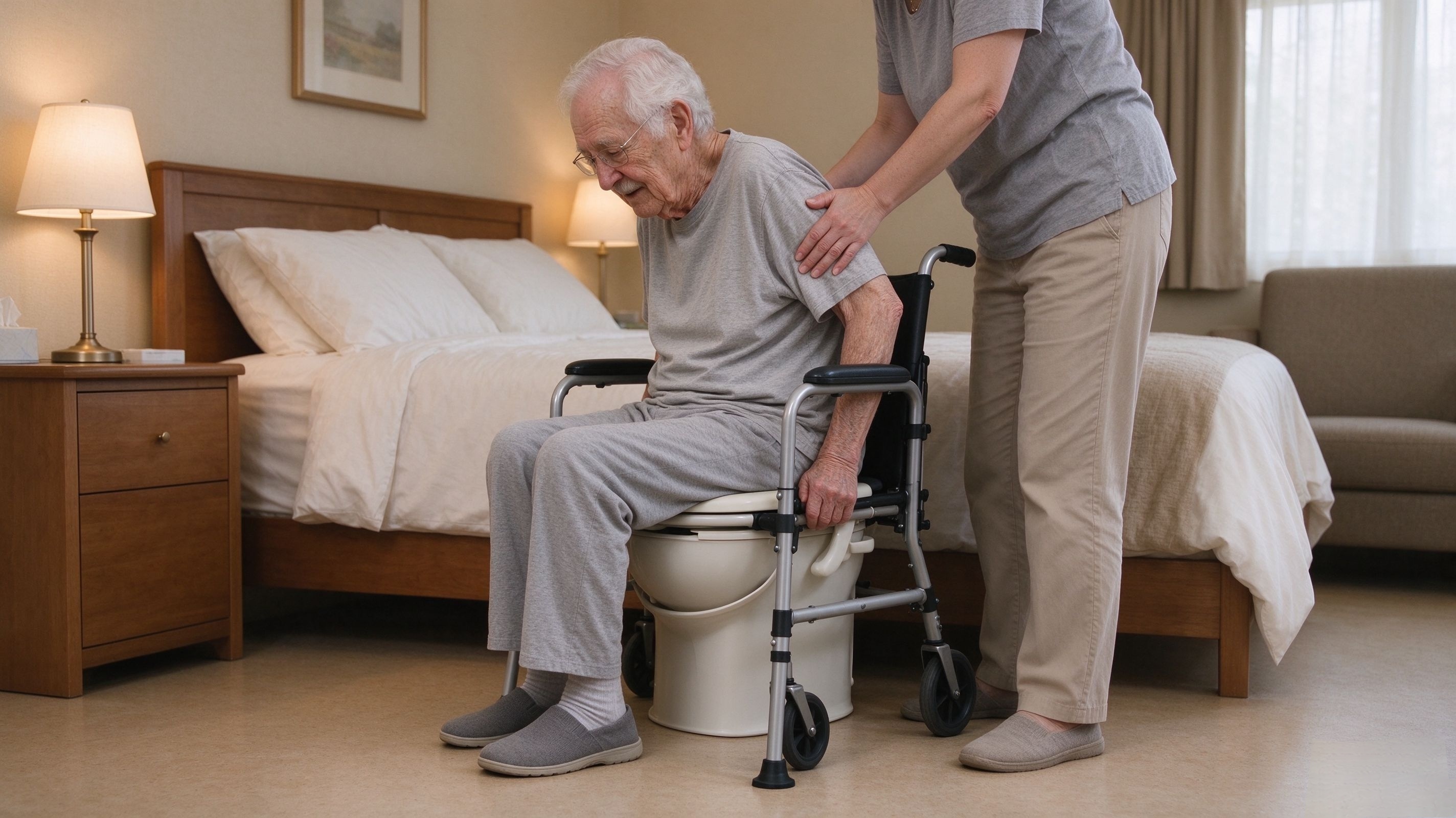
The guideline sets out core operating standards. First is height adjustment: the seat height of the commode chair should match the user’s lower leg length, so that both feet rest firmly on the ground with knees bent at approximately 90 degrees. A seat that is too high or too low will destabilize the user when standing up. Second is placement: the chair must be positioned on firm, level ground, away from carpets, soft mats and slippery tiles. All wheel brakes should be locked to prevent shifting or tipping. Regular checks on the frame, screws, seat cushion and handrails for looseness or damage are required, and the marked weight limit must never be exceeded. The guideline also specifically reminds users to push up slowly using the handrails rather than standing abruptly to avoid falls caused by postural dizziness. Caregivers should refrain from pulling or supporting the user hastily and follow a gradual standing routine.
Care experts involved in developing the guideline note that a commode chair is far more than a toileting convenience; it is tied to older adults’ sense of autonomy and dignity. Many seniors deliberately cut down their water intake out of fear of falling while using the toilet, which can trigger urinary tract issues. Proper use of age-friendly assistive devices eases such anxiety. Many countries are rolling out home age-friendly renovation programs with a growing supply of assistive products, yet supporting safety education lags behind. Numerous families receive these aids without receiving operational training.
Industry insiders are calling for elderly care systems worldwide to include safety training for commonly used aids such as commode chairs and shower chairs in basic caregiver courses. They encourage collaboration between assistive device manufacturers and community senior care centers to deliver on-site demonstrations, bridging the gap between product supply and safe usage. Against the backdrop of global aging, standardizing the use of age-friendly aids in small but vital ways will reduce household fall risks and support seniors to age safely and with dignity at home.
Yiwu Orange Light Future Technology keeps track of global trends in geriatric health and specializes in age-friendly healthcare products. We offer a range of mature solutions to support seniors’ safety and well-being at home. Partners from all sectors are welcome to contact us for business discussions.
RELATED NEWS
- The Rise of Global Silver Consumption: Adults Over 60 Represent Nearly 30% of Wo
- Rehabilitation equipment: Components and functions of wheelchairs
- Healthy Longevity Initiative: Investing in Senior Health to Unlock Dividends of
- Digital Assistance for Seniors: South Korea, Australia, France Build Age-Friendl
- Beyond Longevity with Illness: WHO Strives to Boost Healthy Life Expectancy
CATEGORIES
LATEST NEWS
CONTACT US
Name: Fannie
Mobile:+86 13375799060
Tel:+86 13375799060
Whatsapp:+86 13375799060
Email:fannie@ywolftech.com
Add:589 Longtan Road,Jinhua City Zhejiang Province China