
News
Safe Commode Chair Use: Protecting Seniors’ Toileting Safety and Dignity
As global population aging accelerates, aging at home has become the preferred option for most older adults. Bathrooms are among the highest-risk areas for household accidents, and falls while using the toilet remain a major public health challenge in elderly care. Among various age-friendly assistive devices, the commode chair — also known as a bedside toilet chair — features flexible setup and easy mobility, suitable for use beside beds or in bathrooms. It is widely used for disabled, semi-disabled seniors, those with limited joint mobility, and individuals with reduced mobility after surgery, making it a highly prevalent toileting aid in the international elderly care system. However, surveys from elderly care institutions across multiple countries indicate that many falls and collisions are not caused by defects in the aids themselves. Instead, a lack of standardized operation knowledge among users and caregivers, as well as improper placement, adjustment and use of commode chairs, create hidden safety hazards.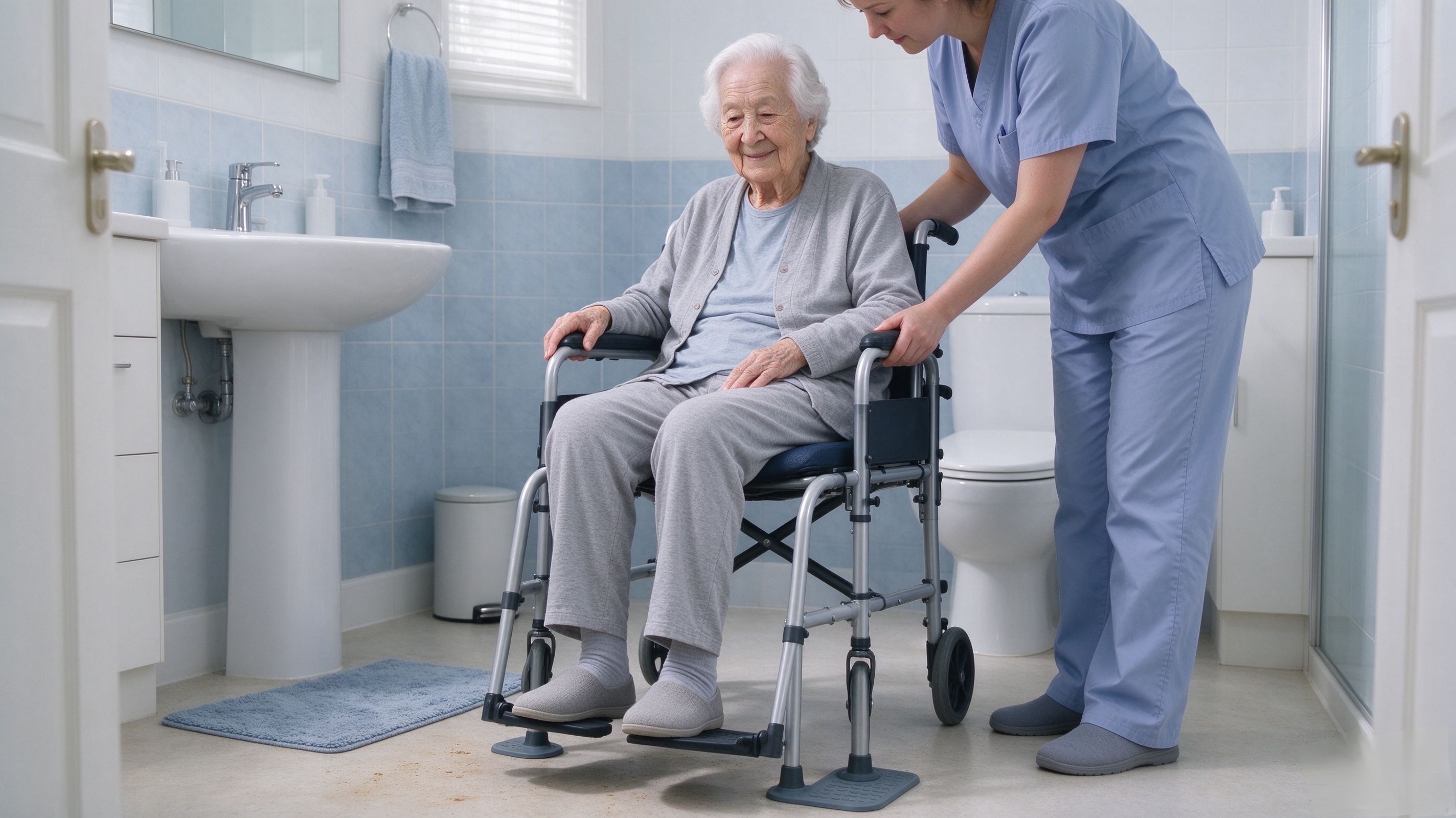
Monitoring data recently released by the International Association of Geriatric Care shows that nearly 30% of falls among older adults at home occur during toileting. Many families assume a commode chair is safe as long as the senior can sit on it, overlooking critical details such as height adjustment, anti-slip fixation, load capacity matching and posture guidance. Some caregivers arbitrarily raise the seat height, fail to lock the brakes, place the device on wet slippery floors, or leave seniors unattended for long periods. These improper practices can easily lead to tipping, sliding or loss of balance while standing up. Such incidents not only cause physical injuries but may also make older adults fearful of toileting and undermine their dignity of independent toilet use.
Caregivers are advised to offer guidance gradually. Seniors with relatively good physical condition may sit down and stand up independently using armrests, while caregivers stay nearby for supervision without sudden pulling or supporting. Those living with cognitive impairment or poor balance should be accompanied at all times and never left alone. After use, the commode pan should be emptied promptly and the chair frame wiped clean and dry. This reduces odors and bacterial growth while extending the service life of the assistive device. Caregivers should regularly observe the user’s condition. If symptoms such as leg weakness, dizziness or unstable sitting posture appear, consult an occupational therapist to assess whether an alternative age-friendly toileting solution is required.
In regions with well-established age-friendly initiatives such as Singapore and Northern Europe, community elderly care centers regularly host hands-on training sessions for assistive devices. Family members and volunteers learn to identify common misuse pitfalls through practical demonstrations. The local philosophy goes far beyond fall prevention, prioritizing respect for older adults’ desire for independence. When a commode chair is fitted and used correctly, seniors can avoid full physical assistance from others and maintain autonomy over toileting, freeing them from feelings of embarrassment or inferiority. This embodies the human-centered value behind age-friendly renovations and assistive device promotion.
Industry experts also remind the public that commode chairs are rehabilitation assistive devices and are not suitable for everyone. Seniors with severe osteoporosis or advanced joint conditions should undergo a professional rehabilitation assessment before purchase, rather than buying products based only on online recommendations. All age-friendly assistive tools exist to support and extend older adults’ independent living capacity. Only with proper selection, adjustment and operation can they deliver their intended benefits.
Faced with a continuously expanding aging population, the global elderly care sector is calling for standardized training on assistive devices to be integrated into routine community care services. Safety is the baseline, and dignity the ultimate goal. A simple commode chair carries one of the most fundamental yet important pursuits of home-based elderly care: enabling seniors to use the toilet safely and age with dignity.
Yiwu Orange Light Future Technology keeps track of global trends in senior health and specializes in age-friendly health products. Our portfolio of mature solutions supports safe and healthy aging at home. Partners from all sectors are welcome to contact us for inquiries and business cooperation!
RELATED NEWS
- Popular in Europe: Cycling Without Age Promotes Healthy Travel for Older People
- Overlooked Silent Threat: Sarcopenia Impairs Quality of Life Among Older Adults
- As China tackles aging, elderly-care robots hit fast track
- WHO Urges Global Restructuring of Elderly Care Systems to Advance the UN Decade
- Mind-Blowing Finding: Environment and Daily Habits Outweigh Genetics in Determin
CATEGORIES
LATEST NEWS
CONTACT US
Name: Fannie
Mobile:+86 13375799060
Tel:+86 13375799060
Whatsapp:+86 13375799060
Email:fannie@ywolftech.com
Add:589 Longtan Road,Jinhua City Zhejiang Province China