
News
Brazil's Care Agency Boom Redraws Grab Bar and Care Bed Orders
Brazil registered more than 57,000 new businesses providing care to older people in 2025 alone, a 74 percent rise for the sector in five years, and the country's statistics agency now counts 15.6 million households with a single occupant, 41.2 percent of them headed by someone aged 60 or over. In the same PNAD Continua survey, 35.2 million Brazilians, or 16.6 percent of the population, were 60 or older, against 11.3 percent in 2012. Put the two together and the buyer of a grab bar or a care bed in Brazil has changed: it is less often a hospital procurement office and more often a three-person agency or a widow living alone.
The policy layer moved at similar speed. Law 15.069 of 2024 created a national care policy, Decree 12.562 of 2025 turned it into a plan of 79 actions across five axes, and the health ministry added a home care programme for older people, Padi, in December 2025. On 15 November the government presented Brasil que Cuida, a plan spanning 20 ministries that 71 states and municipalities have already joined, with R$20 billion added to health and education in 2027. Legislators are working in parallel: the Chamber of Deputies committee on the rights of older persons approved bill 1762/26 for short-stay care centres this month and held a hearing on ratifying the Inter-American convention on the rights of older persons.
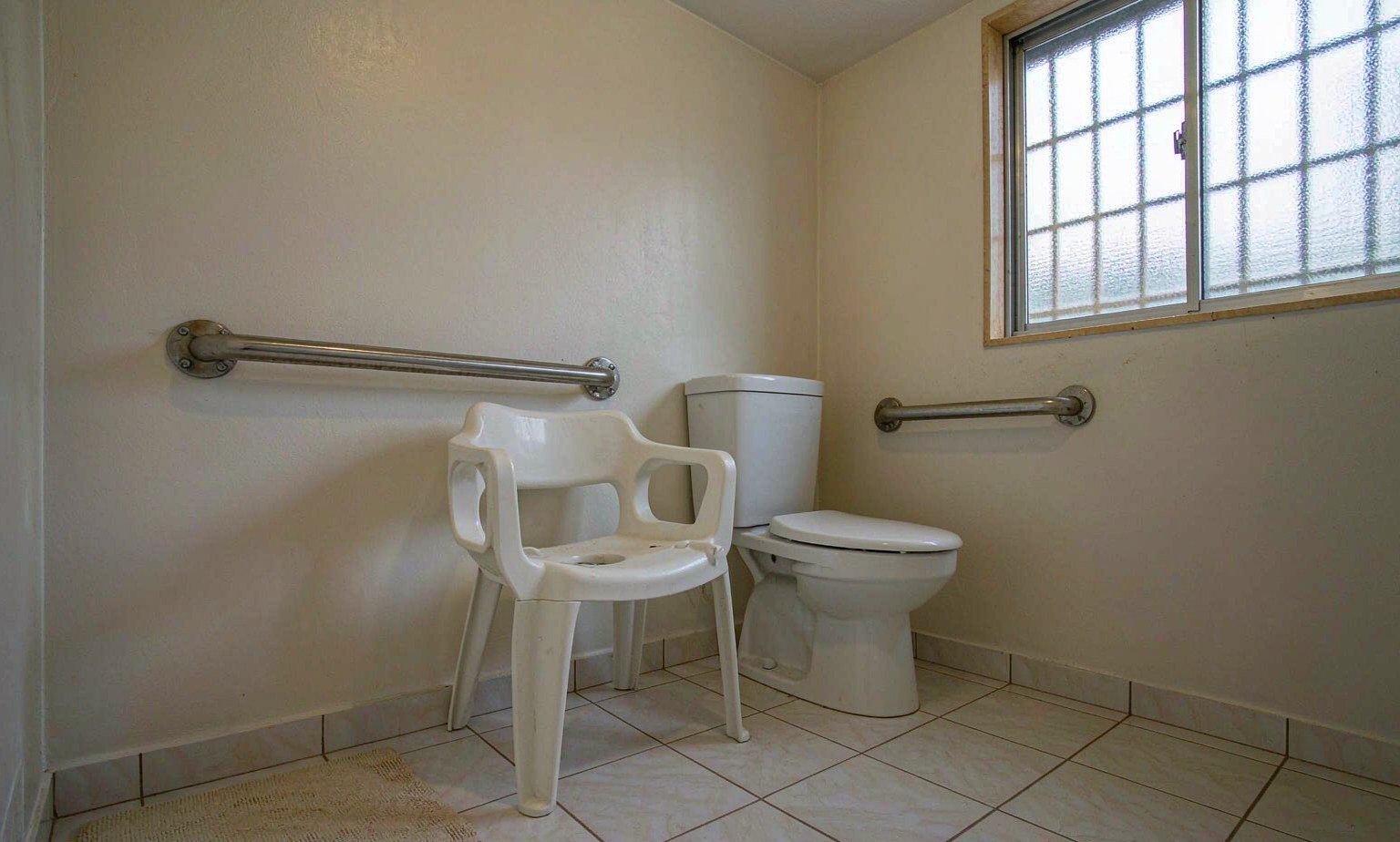
Almost none of that money buys hardware. Care budgets pay for visiting carers, day centres and short stays, so the equipment a family ends up with is bought at retail, rented from an agency, or handed over by a municipal programme with no installation crew. That distinction matters more than any forecast. Brazil's long-term care market is projected to grow at about 6.2 percent a year to 2031, yet the assistive devices that move fastest are the ones that survive a stairwell and a screwdriver, and the silver economy here is being built one household at a time rather than through institutional tenders.
Speed is the other variable. Researchers at BBC Brasil note that the country is ageing roughly three times faster than European countries that built care systems over decades, and IBGE projects 75.3 million people aged 60 or older by 2070, or 37.8 percent of the population, with the 80-plus share rising from 2.2 percent in 2023 to 11.6 percent. Housing was not built for that. Apartment bathrooms rarely offer reliable wall fixings, doorways are narrow, and raised thresholds are common, so a grab bar that needs a masonry anchor and a hammer drill is a harder sale than a suction grab bar or a freestanding toilet frame.
The catalogue follows the rooms. In the bathroom the entry items are a grab bar or safety rail, a shower chair that clears a narrow tray, a raised toilet seat over an existing bowl, a commode chair for night use and a non-slip bath mat; the upgrade is a transfer bench once standing is unsafe. In the bedroom a bed rail or bed assist bar clamps onto an adjustable bed long before anyone buys a full electric nursing bed, followed by a pressure relief mattress and an overbed table when a person spends the day there. At the table, adaptive utensils, a two-handled cup and a divided plate keep meals independent for a few dollars. For leaving the house, a rollator walker with a seat and a basket suits cracked pavements better than a transport wheelchair, and a lift chair removes the transfer that produces most falls.
Those 57,000 new agencies are the distribution channel nobody modelled. Most are small, family-run and staffed by caregivers who are often informal, so they rent rather than buy: a fleet of care beds and commode chairs that moves between clients, gets cleaned and is reissued. They order in tens, not containers, and they judge a supplier on spare parts, replacement castors and a Portuguese instruction sheet rather than on FOB price. Demand is lopsided too. The Southeast accounts for an estimated 50 to 60 percent of home care device demand, while the North and Northeast remain underserved, which rewards a wholesale supplier who can hold stock in a Sao Paulo warehouse and ship a single pallet north. Ageing in place here is not a design trend; it is what happens when no care home bed is available.
Compliance is where the order is won or lost. Under ANVISA rule RDC 751/2022, low-risk items such as manual wheelchairs and walking frames follow a notification route that can clear in 30 to 90 days, while higher classes need full registration, and every foreign manufacturer must appoint a Brazilian registration holder with a local tax number. Powered products add INMETRO certification, wireless ones add ANATEL approval, labels and manuals must be in Portuguese, and unique device identification is being phased in, for class IV from January 2026 and class III from October 2026. A grab bar is a paperwork afternoon; an electric nursing bed is a six-month project. Buyers increasingly ask for the registration dossier before a sample, and the supplier who can send it in one email takes the account.
Yiwu Orange Light Future Technology keeps a close eye on global trends in elderly health. Specializing in age-friendly wellness products, we offer a range of mature solutions to support seniors' safety and health at home. We welcome inquiries and business discussions from all partners!
RELATED NEWS
- Sensory and Non-Drug Therapies: New Dementia-Friendly Care Solutions Explored Gl
- Breaking Overseas Technical Barriers: Domestic Home Standing Mobility Aids Shipp
- Era 3.0 of Wellness Residency: Abandon Superficial Sightseeing, Embrace Immersiv
- Multiple nations promote "nature‑based social programs" to reduce loneliness in
- Silver‑age Risks Amid Climate Disasters: August Typhoons Expose Survival Plights
CATEGORIES
LATEST NEWS
CONTACT US
Name: Fannie
Mobile:+86 13375799060
Tel:+86 13375799060
Whatsapp:+86 13375799060
Email:fannie@ywolftech.com
Add:589 Longtan Road,Jinhua City Zhejiang Province China