
News
Beijing Subsidizes Home Retrofits and Adds Fall Insurance to Senior Care
Beijing's municipal development authority issued a plan on November 11 that puts public money directly behind home modifications for older residents, offering subsidies of up to 50 million yuan for demonstration retrofit spaces and interest support on equipment loans, while asking insurers to design new products around falls. The move turns home safety from a private worry into a subsidized, insurable purchase category, and it arrives as care economists warn that the cost of looking after an aging population is rising faster than general inflation.
Under the implementation scheme released by the Beijing Municipal Development and Reform Commission, towns and neighborhoods can build high-standard sample apartments where seniors experience modifications firsthand, with qualifying projects receiving investment subsidies equal to 70 percent of fixed-asset spending, capped at 50 million yuan. Purchases of age-friendly equipment under loan contracts of at least five million yuan qualify for interest support of up to 2.5 percentage points for two years. The plan also encourages insurers, building on the long-term care insurance system, to explore fall insurance, equipment rental coverage and home-remodel product policies, and to bundle retrofit services as a value-added benefit. It follows a national disability prevention action plan for 2026 to 2030 that calls for fall-risk screening, home hazard assessments and age-friendly renovation, and provincial injury-prevention programs that prioritize high-risk, disabled and rural seniors.
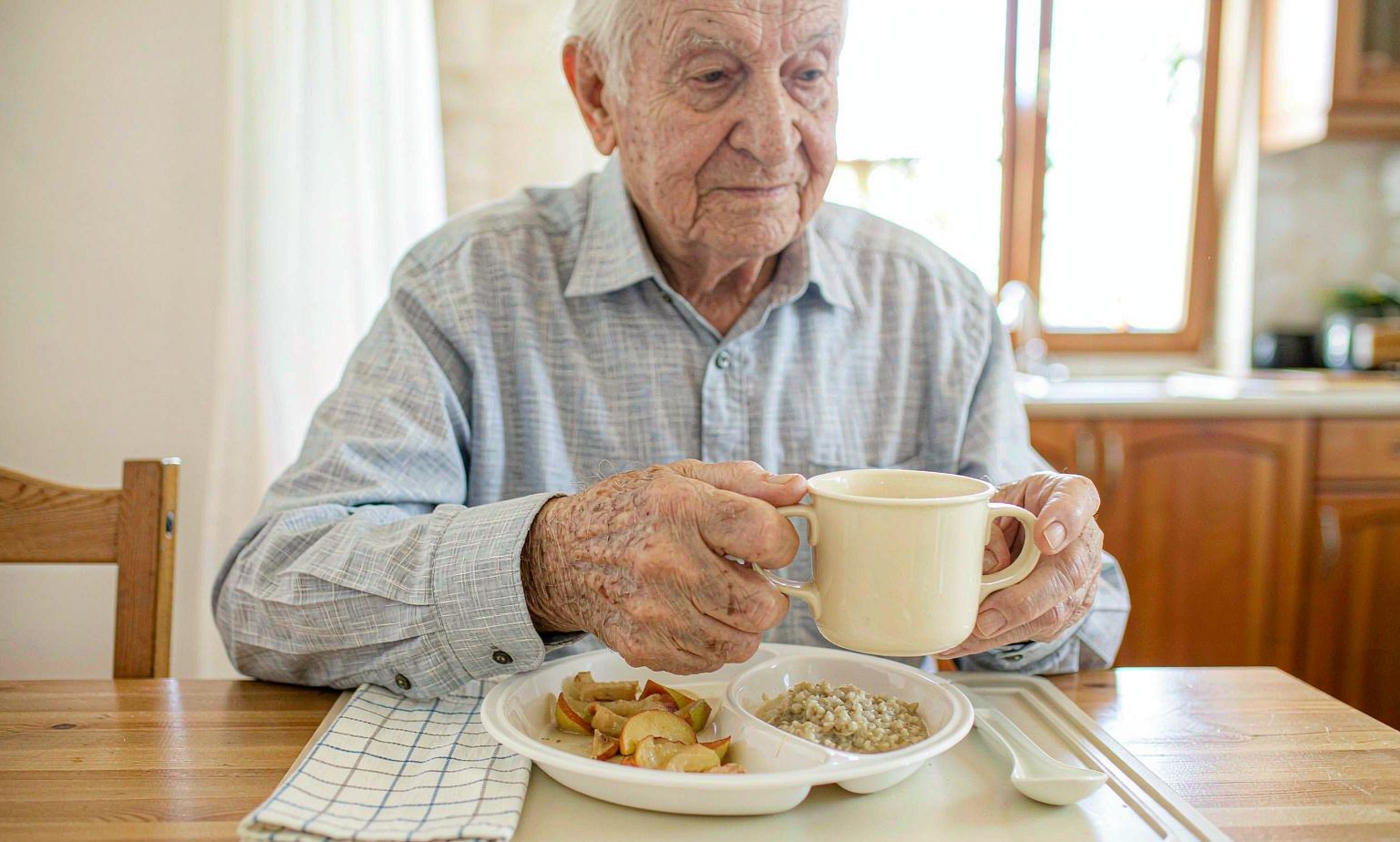
The policy language maps closely onto products that suppliers can ship today. A safer bathroom is assembled from a grab bar or two, a shower chair or bath seat, a raised toilet seat, a commode chair and a non-slip bath mat, none of which need connectivity or a subscription. The bedroom layer pairs an adjustable bed or electric nursing bed with a bed rail, a pressure relief mattress and a bed exit alarm, while a fall detection radar or motion sensor light adds an alert function without a camera. At the table, adaptive utensils, a non-slip plate and a two-handled cup let a person eat without assistance, and a reacher grabber, dressing aids and a folding cane cover the small movements that decide whether someone manages alone. Across these rooms, age-friendly products stop being a single gadget and become a kit that can be specified, quoted and installed.
For overseas buyers, two signals matter. First, when a city subsidizes the retrofit and an insurer underwrites the fall risk, procurement shifts from one-off retail to bundled contracts, and the winners will be wholesale suppliers who can deliver a complete room set with consistent documentation rather than a single item at the lowest price. Second, the economics are hard to ignore: recent industry analysis puts average home care price growth at 7.9 percent by May 2026, above food and housing, with median assisted living near 70,800 dollars a year, up 46 percent since 2019, and roughly 36 percent of people over 75 living alone. Against that backdrop, the argument for ageing in place is no longer only about dignity but about containing cost, which is precisely the calculation that pushes grab bars, care beds and fall detection into mainstream purchasing.
China's scale gives this a supply-side edge. Official figures put the population aged 60 and above at more than 323 million, and the silver economy is projected to reach 9.8 trillion yuan in 2026. At the same time, penetration remains low: industry reports suggest urban home modification rates are under 6 percent and barrier-free coverage in rural areas below 30 percent, with an estimated 40 million falls among older people each year, half of them at home. Research cited at recent industry events indicates that systematic retrofitting can cut fall rates by up to 40 percent and that grab bars alone reduce fall-related injuries by about 39 percent. That gap between proven benefit and low adoption is where policy money is now flowing, and it is where manufacturers of assistive devices should position their catalogs.
Beijing's experiment is worth watching because it links three things that have until now been separate: a subsidy for the physical work, an insurance product for the residual risk, and a standards framework for the products themselves. If the model holds, the definition of independent living changes. It is no longer a matter of whether an older person can install a bed rail or a shower chair, but whether the market can deliver a documented, insurable package at a price a family or a city will pay. Suppliers who treat safety equipment as a compliance-ready system, with OEM and ODM flexibility for local programs, will be the ones called when these retrofit projects move from demonstration apartments to ordinary homes.
Yiwu Orange Light Future Technology keeps a close eye on global trends in elderly health. Specializing in age-friendly wellness products, we offer a range of mature solutions to support seniors' safety and health at home. We welcome inquiries and business discussions from all partners!
RELATED NEWS
- set up 500 billion yuan for service consumption and elderly care re-lending
- Small Wheelchairs Uphold Dignity in Old Age: The World Re‑examines Mobility Righ
- Global Rise of Silver Volunteering: Seniors Share Experience to Give Back
- Exploring Overseas Silver Market, All-in-One Geriatric Wellness Solutions Sell W
- Digital Assistance for Seniors: South Korea, Australia, France Build Age-Friendl
CATEGORIES
LATEST NEWS
CONTACT US
Name: Fannie
Mobile:+86 13375799060
Tel:+86 13375799060
Whatsapp:+86 13375799060
Email:fannie@ywolftech.com
Add:589 Longtan Road,Jinhua City Zhejiang Province China