
News
Silver‑age Risks Amid Climate Disasters: August Typhoons Expose Survival Plights of China’s Elderly in Severe Weather
August marks the peak typhoon season along China’s coastal regions, bringing gale‑force winds, heavy downpours, waterlogging and severe convective weather one after another. Against the backdrop of increasingly frequent extreme climate events, typhoons present not only a test for urban flood control but also lay bare the real‑life dilemmas faced by older adults amid disasters. Deteriorating physical functions, limited mobility and relatively scarce disaster‑avoidance resources make the elderly a particularly vulnerable group in climate‑related disasters. Safety protection during typhoon seasons has become a public issue that cannot be overlooked in an ageing society.
During typhoon landfalls, heavy rainfall frequently causes road waterlogging and slippery surfaces, with hidden dangers such as fallen trees, collapsing billboards and displaced manhole covers everywhere. For slow‑moving seniors, some of whom rely on mobility aids for daily travel, ordinary outings turn into high‑risk activities. Slippery ground greatly raises risks of falls and injuries, while submerged road surfaces obscure conditions, leading to bumps, stumbles and slips in floodwater. Many solitary‑dwelling older adults need to go out for groceries or medical prescriptions. When typhoons strike and travel routes are disrupted, even basic daily needs become hard to meet. Some old residential compounds have inadequate drainage, resulting in indoor flooding for ground‑floor households. Advanced‑age residents with limited mobility struggle to relocate belongings or evacuate quickly in emergencies.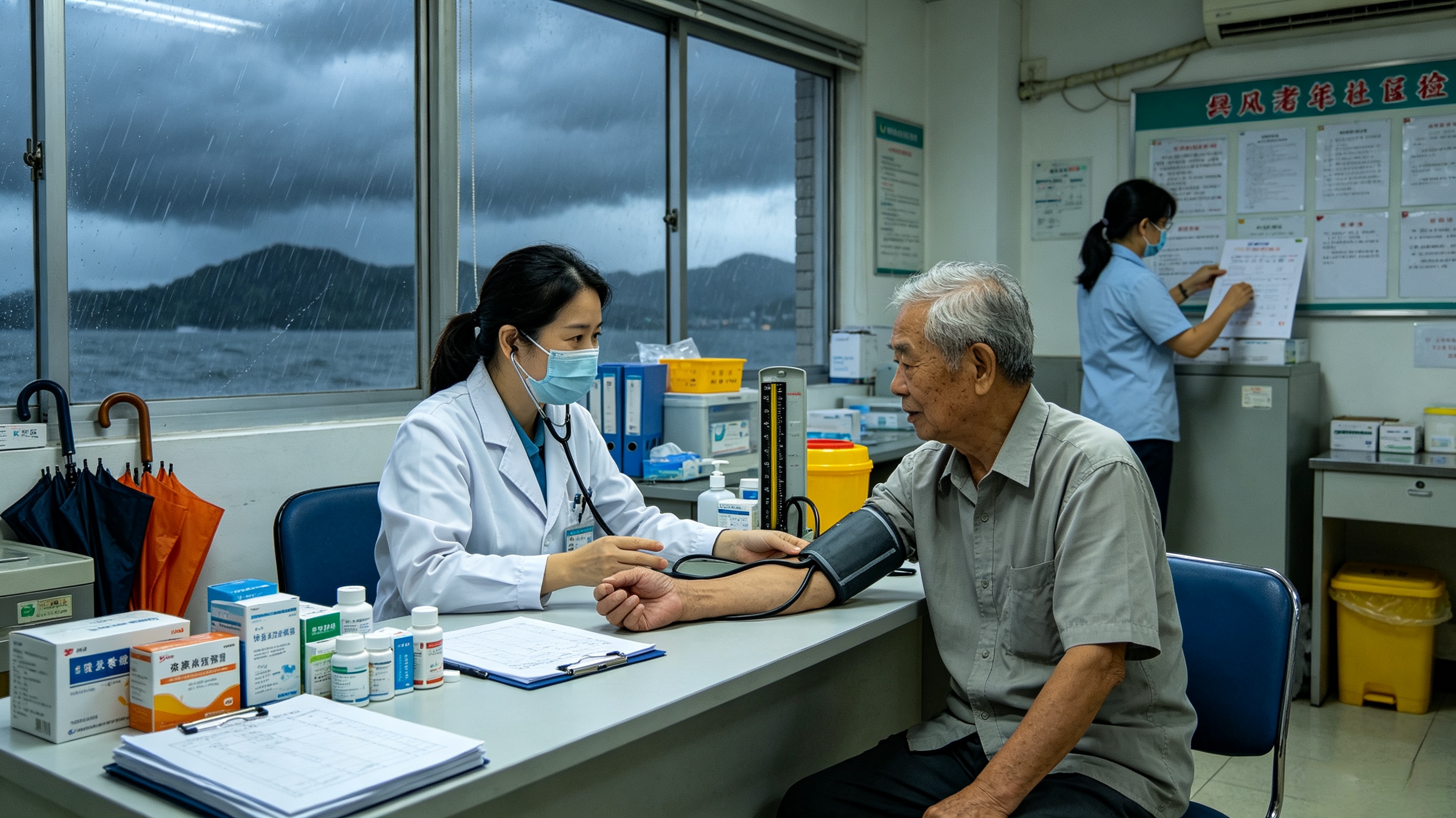
Beyond travel safety, typhoon weather poses direct threats to older people’s physical health. Sharp shifts in wind, temperature and humidity can trigger flare‑ups of chronic conditions including cardiovascular, cerebrovascular and respiratory illnesses. Low‑pressure, rainy conditions also aggravate joint pain and disrupt sleep and mental wellbeing. Power and water outages are common during typhoon disasters. Once power fails, seniors dependent on home‑use oxygen concentrators or physiotherapy equipment face immediate health hazards. Solitary and empty‑nest elderly lack timely in‑person care from family members. Should health emergencies occur, poor weather hinders emergency medical access and further escalates health risks. Some older adults have limited access to early‑warning information, fail to receive typhoon alerts and underestimate hazards, thus missing optimal windows for risk avoidance.
In response to the silver‑age risks highlighted by climate‑driven disasters, multiple regions have explored disaster‑reduction measures tailored for older populations. Following typhoon alerts, community workers conduct targeted home visits to remind solitary, advanced‑age and disabled seniors, maintain registration ledgers for high‑risk elderly residents and pre‑arrange evacuation and resettlement plans. Certain local authorities have added age‑friendly facilities at emergency shelters, stocking common medications, ergonomic seating and accessible mobility spaces to accommodate seniors’ living needs. Besides mobile‑phone‑based notifications, community loudspeaker broadcasts and door‑to‑door notifications are adopted to ensure early warnings reach older adults who do not use smartphones.
Nevertheless, gaps remain in age‑oriented disaster prevention. Challenges to be continuously addressed include adjusting disaster‑warning systems to fit information‑receiving habits of seniors, advancing disaster‑resistant and age‑friendly renovations for ageing housing, popularizing knowledge on emergency supplies for home‑dwelling elderly, and securing medical support for older adults during disasters.
As extreme weather events grow more frequent globally, climate‑related disasters intersect with population ageing. Disaster protection for seniors is no longer merely a matter of emergency evacuation; it constitutes a key component of active ageing. Repeated typhoon incidents remind society that disaster prevention and mitigation should not focus solely on improving infrastructure to withstand wind and rain. The real‑world hardships of vulnerable groups amid storms must also be acknowledged. By improving disaster‑protection networks for older adults and integrating silver‑population safety considerations into climate‑response initiatives, society can deliver more reliable safeguards for every senior during extreme weather.
Yiwu Orange Light Future Technology pays close attention to the safety and health of older adults during typhoon weather. The company offers a wide range of elderly‑assisting health‑care products. Inquiries and purchases are welcome!
RELATED NEWS
- Adapting to an Ageing Society: Global Nations Boost Healthcare Security for Olde
- Small Wheelchairs Uphold Dignity in Old Age: The World Re‑examines Mobility Righ
- Healthy Longevity Initiative: Investing in Senior Health to Unlock Dividends of
- New business opportunities in the silver economy: The elderly toy market is on t
- Proper Fitting Is Key: Wheelchair Selection and Healthy Usage Guidelines for Sen
CATEGORIES
LATEST NEWS
CONTACT US
Name: Fannie
Mobile:+86 13375799060
Tel:+86 13375799060
Whatsapp:+86 13375799060
Email:fannie@ywolftech.com
Add:589 Longtan Road,Jinhua City Zhejiang Province China