
News
Age‑Friendly Mobility: Securing Independent Living for Globally Ageing Populations
According to United Nations statistics, the global elderly population keeps expanding, and a growing number of countries are entering a deeply aged‑society era. For older adults, travel is more than mere physical movement. It is a fundamental right that sustains independent living, facilitates social engagement, and enables access to healthcare and daily‑life services. Where road facilities, public transport and travel services fail to match the physical conditions and usage habits of the elderly, seniors’ activity radius will keep shrinking. Many are confined to their homes, and their capacity for independent living is consequently eroded. Against this backdrop, age‑friendly mobility has become an unavoidable key issue in global ageing governance.
Mobility barriers stand as a practical obstacle preventing many older adults from living independently. Deteriorating physical functions, slower gait, and impaired eyesight and hearing create special environmental requirements for elderly travellers. Insufficient duration for pedestrian traffic lights, lack of rest seats on sidewalks, high steps at bus stops, and high‑threshold smart‑device operations — these small‑scale practical barriers combine to raise the threshold for seniors to go outdoors. Restricted by poor mobility, many elderly people cannot attend medical follow‑ups, run daily errands or join community activities on their own. Their social circles shrink and they fall into social isolation. Long‑term home confinement not only accelerates physical deterioration but also triggers mental‑health issues such as depression. Some seniors capable of ageing at home end up relying heavily on family caregivers or even moving into care institutions prematurely. The WHO Age‑Friendly Cities Framework has repeatedly stressed that affordable, safe and barrier‑free mobility serves as a core pillar safeguarding older people’s right to independent living. Without freedom of movement, quality of life for the elderly cannot be guaranteed.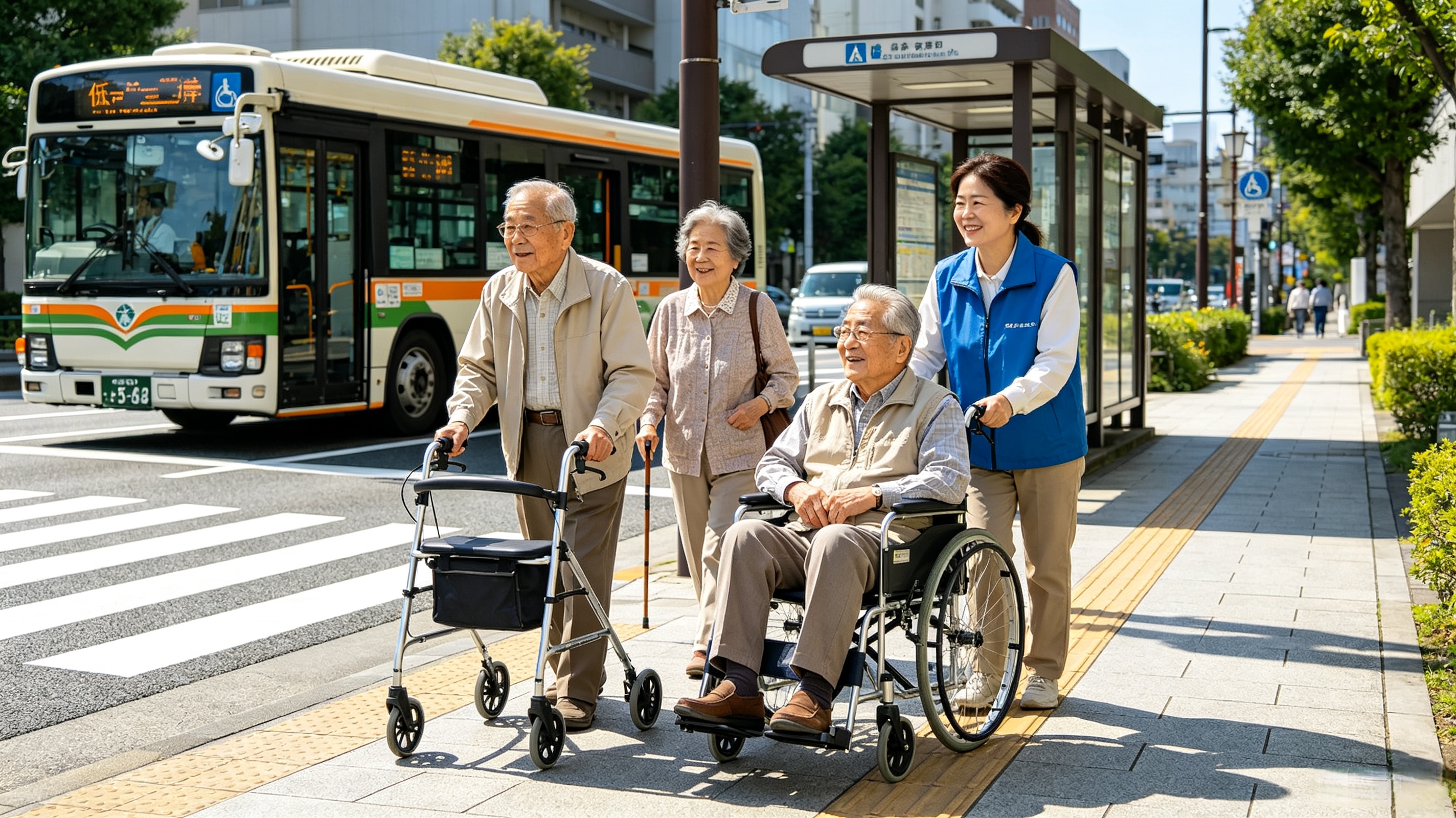
Multiple European countries have pushed for comprehensive age‑friendly public transport through legislation. The United Kingdom has widely deployed low‑floor buses fitted with retractable ramps and designated wheelchair parking spaces onboard to remove boarding‑alighting barriers to the maximum extent. Denmark has launched custom door‑to‑door flexible transport services targeting elderly residents in rural and sparsely populated areas. Market‑oriented services fill gaps left by public transport and address the long‑standing pain point of “difficulty getting out” among remote‑area seniors. A door‑to‑door electric shuttle bus pilot in rural southern France reported a 60‑percent rise in elderly users within six months of launch. Most trips were for medical appointments, shopping and social interaction, effectively alleviating the mobility‑isolation crisis among rural older adults. Cities including Lisbon, Portugal, offer free public‑transport access for senior citizens to lower economic barriers and encourage them to venture outdoors.
Nevertheless, the global advancement of age‑friendly mobility still faces multiple practical dilemmas. Uneven urban‑rural development is particularly prominent. While age‑friendly renovations move forward steadily in large cities, rural areas suffer from sparse public‑transport schedules and ageing infrastructure, making mobility challenges for the elderly more acute. Some countries face limited funding for renovation, slowing upgrades to old neighbourhoods. Many accessibility facilities suffer from “emphasis on construction yet neglect of maintenance”. Damaged or occupied facilities go unrepaired, resulting in the awkward reality that “accessibility facilities exist but cannot be used”. Age‑friendly mobility also involves trade‑offs between costs and benefits. Welfare policies such as free fares and custom‑shuttle services create fiscal pressure. Balancing public‑finance burdens with the rights and interests of older adults remains a common challenge for nations worldwide. Many projects prioritize hardware construction over demand‑oriented research. Built facilities fail to reflect real‑life needs voiced by the elderly, ending up well‑equipped yet impractical for end users.
Yiwu Orange Light Future Technology keeps close track of global trends in elderly health development and specializes in age‑friendly health‑care products. A wide range of mature products support safe and healthy ageing‑at‑home for senior users. Partners from all sectors are welcome for inquiries and business negotiations!
RELATED NEWS
- From "survival care" to quality senior care: A transformation in the global phil
- Exploring Overseas Silver Market, All-in-One Geriatric Wellness Solutions Sell W
- Overlooked Silent Threat: Sarcopenia Impairs Quality of Life Among Older Adults
- Wheelchairs for the elderly
- Sensory and Non-Drug Therapies: New Dementia-Friendly Care Solutions Explored Gl
CATEGORIES
LATEST NEWS
CONTACT US
Name: Fannie
Mobile:+86 13375799060
Tel:+86 13375799060
Whatsapp:+86 13375799060
Email:fannie@ywolftech.com
Add:589 Longtan Road,Jinhua City Zhejiang Province China