
News
Technology Empowers Later Life: Europe and US Accelerate Deployment of Smart Walkers and Home Fall Prevention Devices
As population aging deepens across Europe and the United States, aging in place has become the preferred option for most seniors. Age-friendly technologies are moving out of laboratories and into ordinary households, with smart walkers and AI-powered home fall monitoring devices entering large-scale deployment to reduce fall risks for the elderly and extend their ability to live independently.
Falls remain the top safety threat for seniors living at home in Europe and the US. Statistics indicate that falls among older adults can easily lead to fractures and traumatic brain injuries. These incidents not only increase healthcare costs but may also force seniors to leave their homes and move into care facilities. To address this challenge, research institutions and rehabilitation assistive device manufacturers in Europe and the US keep upgrading smart mobility products. The new-generation smart walkers are equipped with inertial sensing modules to capture real-time gait changes and identify early signs of balance loss. When unstable center of gravity is detected, the device automatically widens its support base and provides auxiliary thrust to prevent falls. Some models can connect to the cloud and sync gait data with community caregivers and rehabilitation physicians, supporting daily walking assistance and long-term health assessment. Compared with traditional walkers, these products balance light weight and safety, suitable for indoor walks and short outdoor trips.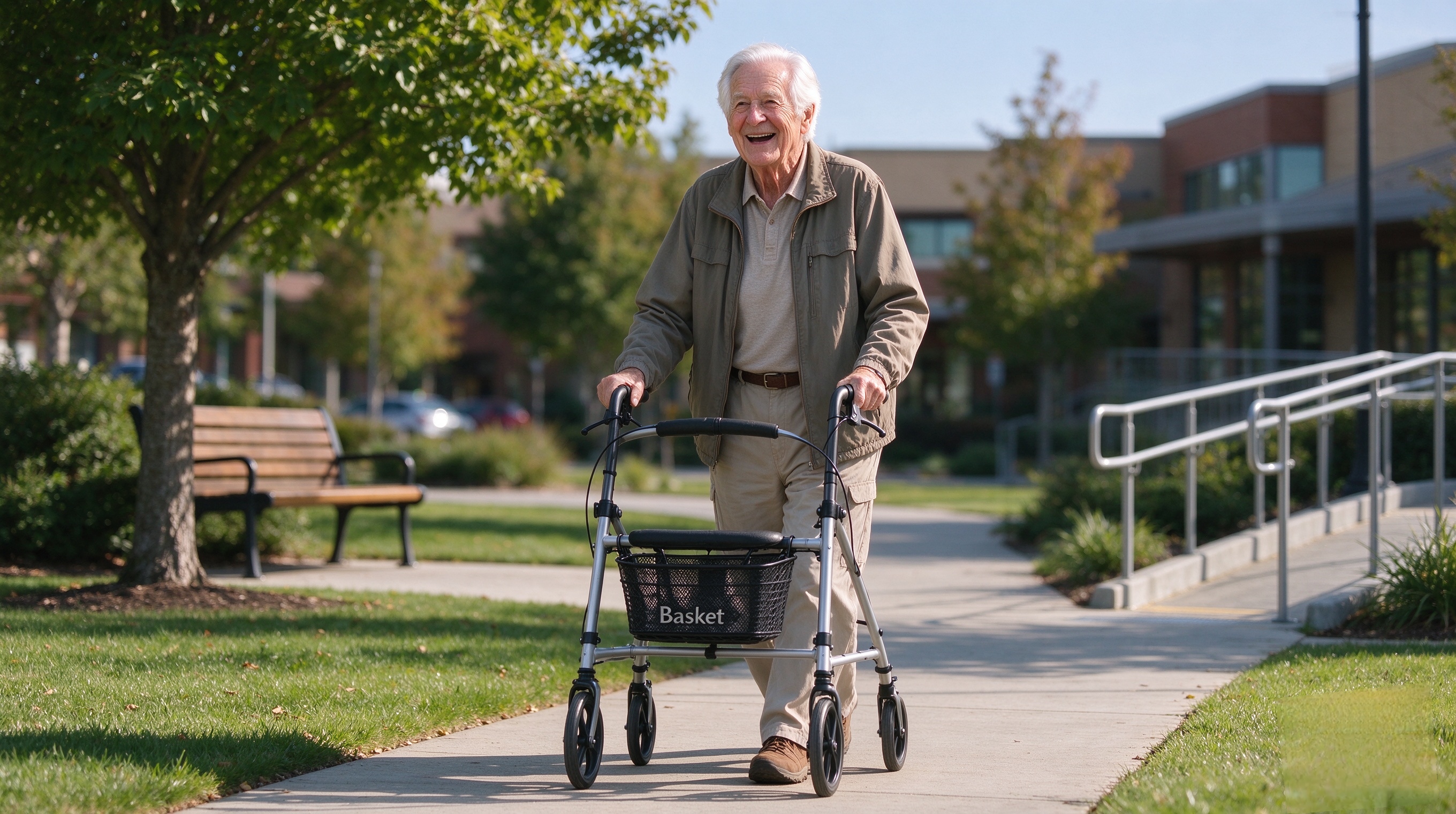
The home fall prevention sector features a diverse range of products. Beyond smart walking hardware, camera-free millimeter-wave monitoring systems, wearable fall alert sensors and floor pressure mats are being piloted in home and community settings across Europe and the US. Some systems rely on radar to track body movements without cameras, protecting user privacy. In the event of a fall, the device immediately sends alerts and location information to family members and community care centers, cutting emergency response time. Many European countries have rolled out such home safety solutions in community aged care programs, while some regions in the US have included certified fall prevention devices in medical insurance pilot reimbursement schemes to lower purchase barriers for seniors and speed up market adoption.
Policy support further accelerates the rollout of age-friendly technology. Nordic nations, Germany and the United Kingdom have added home age-friendly renovations and smart assistive devices to public aged care service lists, offering subsidies for low-income elderly households. The US continues to expand medical reimbursement coverage for remote home monitoring, encouraging home care service providers to adopt integrated solutions combining smart walkers and fall detection. Many nursing homes and community care centers are placing bulk orders for smart assistive tools to ease care burdens. Market research shows that North America and Europe together account for over 60% of the global home fall prevention device market, with the silver technology sector maintaining steady growth.
Industry insiders note that current products still face challenges. Some devices feature complicated operations and create digital barriers for elderly users. Product costs and varying certification standards across regions also hinder international promotion. Developers are simplifying human-computer interaction, reducing complex touchscreen operations and adopting intuitive physical buttons and voice control to suit the usage habits of seniors.
The UN Decade of Healthy Ageing initiative states that the core of active ageing is preserving older people’s capacity for independent living. Age-friendly technologies such as smart walkers and home fall prevention tools do not replace caregivers. Instead, they complement the care system, safeguard seniors living at home and enable more older adults to age comfortably in familiar surroundings. Industry forecasts predict that integrated home safety solutions combining gait analysis and AI risk prediction will continue to penetrate European and US markets in the coming years, bringing sustained growth opportunities to the silver rehabilitation assistive device industry.
Yiwu Orange Light Future Technology keeps track of global trends in elderly health. We focus on age-friendly health products, with a portfolio of mature solutions to support seniors’ safety and wellbeing at home. Partners from all sectors are welcome to reach out for inquiries and cooperation!
RELATED NEWS
- Smart Health Technologies Enter Communities to Build Full-Scenario Age-Friendly
- Silver Generation Returns to Classrooms: Global Senior Education Pilots Turn Lea
- Combating Geriatric Obesity Worldwide: International Projects Promote Healthy Ol
- New business opportunities in the silver economy: The elderly toy market is on t
- How to help patients get in and out of wheelchairs
CATEGORIES
LATEST NEWS
CONTACT US
Name: Fannie
Mobile:+86 13375799060
Tel:+86 13375799060
Whatsapp:+86 13375799060
Email:fannie@ywolftech.com
Add:589 Longtan Road,Jinhua City Zhejiang Province China