
News
Smart Exoskeleton Restores Independent Walking Freedom for the Elderly
Recently, a lightweight intelligent exoskeleton walking aid has been officially launched on the market. Featuring easy donning, AI adaptive power assistance and all-scenario adaptability, it delivers a brand-new mobility solution for the elderly with walking impairments worldwide. The device effectively addresses the problems of leg weakness and limited mobility among senior citizens, helping them regain the ability to walk independently and bringing fresh momentum to the global smart elderly care equipment sector.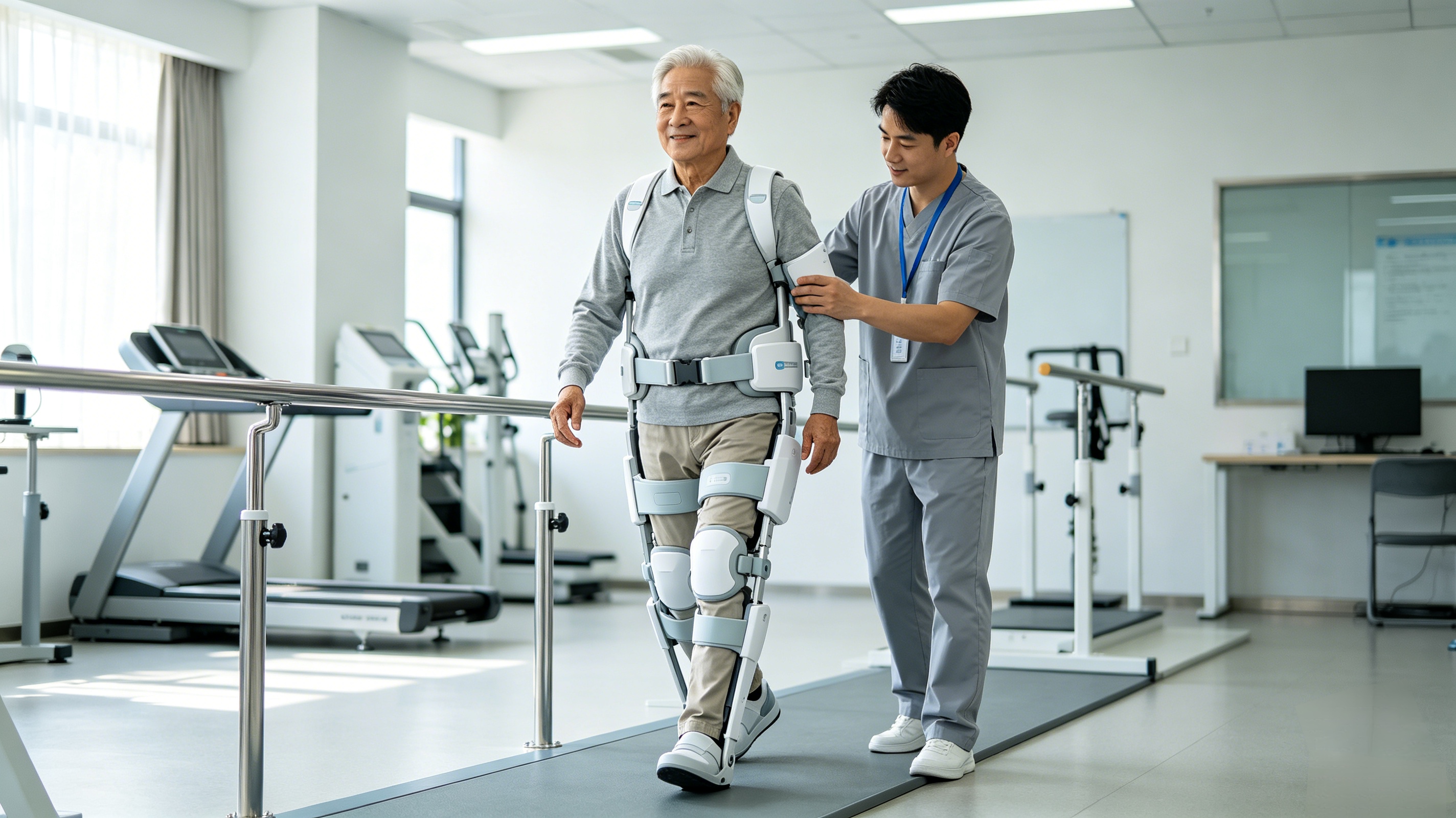
Against the backdrop of a lack of unified performance specifications for elderly care robots across the global market, China has taken the lead in formulating the first international standard for such robots, establishing benchmarks for product design, manufacturing, testing and certification.
The International Electrotechnical Commission (IEC) develops international standards in electrical, electronic, information technology and related fields. This international standard for elderly care robots was developed under the leadership of the IEC Committee on Active Assisted Living Systems.
Ma Dejun, Chair of the committee and Vice Chairman of the China Association for Standardization, stated that China launched interdisciplinary systematic research on this subject back in 2013 and jointly set up the IEC Committee on Active Assisted Living Systems together with multiple countries. After years of efforts, this internationally influential standard was finalized.
It covers general requirements for elderly care robots in terms of usability, reliability, accessibility, energy consumption and noise. In response to seniors’ practical needs including daily life, health monitoring, emergency response, social interaction, housekeeping assistance, recreation, home management, care support, mobility assistance, as well as information and data management, it also specifies functional classification and performance indicators for elderly care robots.
Bischoff commented, “The elderly care robot market boasts broad prospects, and this international standard is vital for the whole world.”
It is reported that the equipment has undergone multiple rounds of testing and optimization. It has been introduced to domestic and international elderly care institutions and community elderly care services, serving multiple scenarios including home rehabilitation, daily walking assistance and post-surgery recovery.
Unlike traditional walking aids that only offer passive support, the intelligent exoskeleton mimics natural human gait. It enables seniors to travel on their own without relying on caregivers. Meanwhile, it works as professional rehabilitation equipment to help mobility-impaired seniors gradually restore physical movement, combining practical social value with clinical rehabilitation benefits.
Industry analysts specializing in global health technology point out that the global exoskeleton market is expanding rapidly, and there is a huge shortage of household walking exoskeletons for civilian use.
The launch of this intelligent exoskeleton walking aid overcomes the drawbacks of traditional international walking assistive devices such as high prices, complicated operation and poor adaptability. With its cost efficiency, light weight and intelligent functions, it can meet the mass elderly care demands worldwide.
With continuous technological upgrading and global promotion, this product will drive the upgrading of the global elderly rehabilitation industry. Cutting-edge technology will safeguard seniors’ dignity of movement worldwide and support the development of a high-quality, intelligent global senior care system.
Yiwu Orange Light Future Technology focuses on elderly health. We provide a wide range of high-quality walking aids. Welcome to contact us for inquiries and purchases!!!
RELATED NEWS
- Small Wheelchairs Uphold Dignity in Old Age: The World Re‑examines Mobility Righ
- Combating Geriatric Obesity Worldwide: International Projects Promote Healthy Ol
- Multinational Joint Study: A Healthy Lifestyle Can Effectively Slow Cognitive De
- Fighting Ageism: Advancing Equal and Dignified Healthcare for Older Patients
- Developing the silver economy
CATEGORIES
LATEST NEWS
CONTACT US
Name: Fannie
Mobile:+86 13375799060
Tel:+86 13375799060
Whatsapp:+86 13375799060
Email:fannie@ywolftech.com
Add:589 Longtan Road,Jinhua City Zhejiang Province China