
News
Wheelchair Accidents Highlight the Urgency of Senior Assistive Device Safety Overseas
As the global aging process continues to advance, wheelchairs, as the most vital mobility aids for the elderly with limited mobility, are widely used in households, elderly‑care institutions and public transport scenarios. However, a spate of recent overseas incidents involving wheelchair tipping, slipping and collision‑related injuries has triggered widespread social reflection. The safety of wheelchairs and other mobility aids for senior citizens has gradually become a focal topic in public health discussions.
Many accidents occur in elderly‑care settings. Some nursing staff in aged‑care institutions are not proficient in wheelchair operating procedures. They neglect basic steps such as locking wheelchair wheels, fastening safety belts and inspecting anti‑tip devices, resulting in falls and injuries among elderly users during transfers and transportation on lifting platforms. A small number of cases have even ended in fatalities. The involved institutions have not only faced administrative penalties, but also prompted local regulators to re‑examine management loopholes in assistive‑device operations at senior‑care facilities.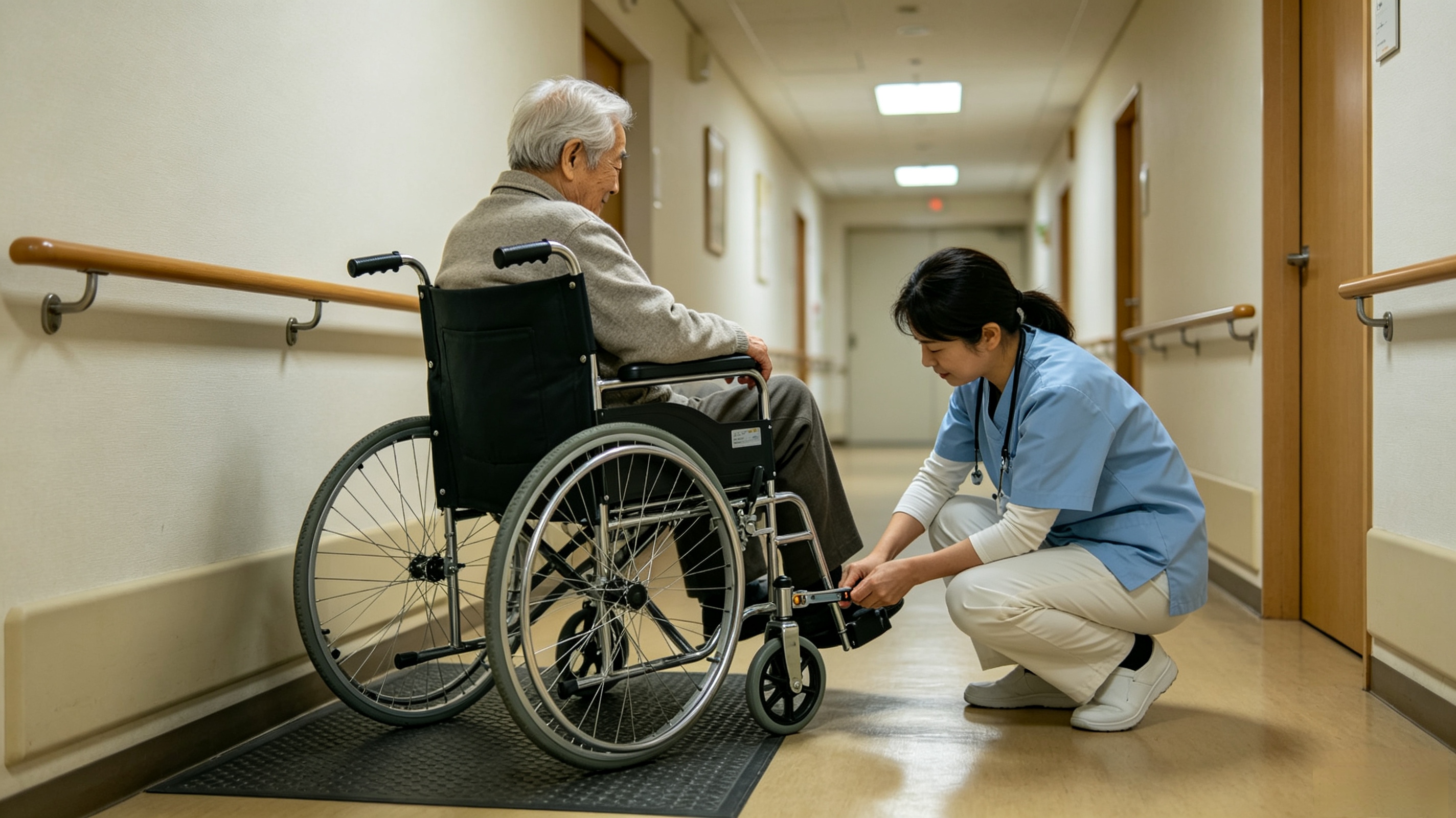
Apart from human operational errors, wear‑and‑tear of assistive devices and lack of routine maintenance are also risk factors. Without regular inspections and repairs, aging wheelchair brakes, worn tires and loose screws can easily cause tipping on ramps or during turns. Surveys by overseas rehabilitation industries show that a considerable number of elderly households keep using old wheelchairs with little regular inspection and maintenance, leaving potential safety hazards unaddressed for long periods.
In response to these successive safety accidents, overseas industry bodies and public health authorities have taken action. Standardized wheelchair operation guidelines for caregivers and elderly family members have been released, covering practical points including pre‑use checks, wheel‑locking essentials, precautions for ramp travel, wheelchair securement on public transport and routine maintenance. Some regions have also incorporated wheelchair‑safety operations into basic training and assessment for nursing staff to strengthen safety awareness among front‑line practitioners.
Meanwhile, public opinions point out that assistive‑device safety cannot rely merely on caution from users and caregivers. On one hand, popular‑science outreach should be carried out to simplify safety knowledge for ordinary families and lower learning barriers. On the other hand, assistive‑device manufacturers, public‑transport operators and elderly‑care institutions need to share responsibilities to make up deficiencies through product optimization, facility renovation and personnel training.
Industry insiders note that wheelchairs serve to expand seniors’ range of activities and safeguard their dignity of travel. Only when standardized operations are fully implemented, with consideration given to product safety, environmental adaptability and users’ capabilities, can accidental injuries be effectively reduced and senior citizens’ right to safe mobility be protected.
Yiwu Orange Light Future Technology keeps a close eye on global senior‑health development trends and focuses on elderly‑friendly health‑product sectors. A wide range of well‑developed products help seniors achieve safe and healthy home‑dwelling. Partners from all sectors are welcome for inquiries and business negotiations!
RELATED NEWS
- Global Silver Wave Fuels Export Growth of Portable Elderly Wheelchairs
- Breaking Overseas Technical Barriers: Domestic Home Standing Mobility Aids Shipp
- Services for Older Adults Living at Home
- Overseas Attention Drawn to Wheelchair Safety: Proper Operation Cuts Senior Acci
- Ageless Travel: Senior Women in Europe and America Embrace Solo Travel
CATEGORIES
LATEST NEWS
CONTACT US
Name: Fannie
Mobile:+86 13375799060
Tel:+86 13375799060
Whatsapp:+86 13375799060
Email:fannie@ywolftech.com
Add:589 Longtan Road,Jinhua City Zhejiang Province China